The raccoon sent to the White House for Thanksgiving dinner, 100 years ago
In November 1926, a live raccoon arrived at the Coolidge White House as a holiday meal. She ended up a famous pet instead. Here is the story, 100 years later.
This Thanksgiving marks 100 years since one of the stranger gifts a president ever received. In November 1926, a live raccoon arrived at the White House. She was not a pet. She was meant to be dinner.
President Calvin Coolidge had other plans. He and First Lady Grace Coolidge kept the animal, named her Rebecca, and let her roam the executive mansion. She became one of the best-known presidential pets in American history.
What happened
According to CBS News, which interviewed Andrew Hager, historian-in-residence at the Presidential Pet Museum, the gift came from a Coolidge supporter in Mississippi. "One of Calvin Coolidge's supporters from Mississippi decided to send the Coolidges a Thanksgiving dinner," Hager said, "and what he sent them was a live raccoon."
Boston.com reports the sender promised a "toothsome flavor" for the holiday feast. None of the sources we read name the sender.
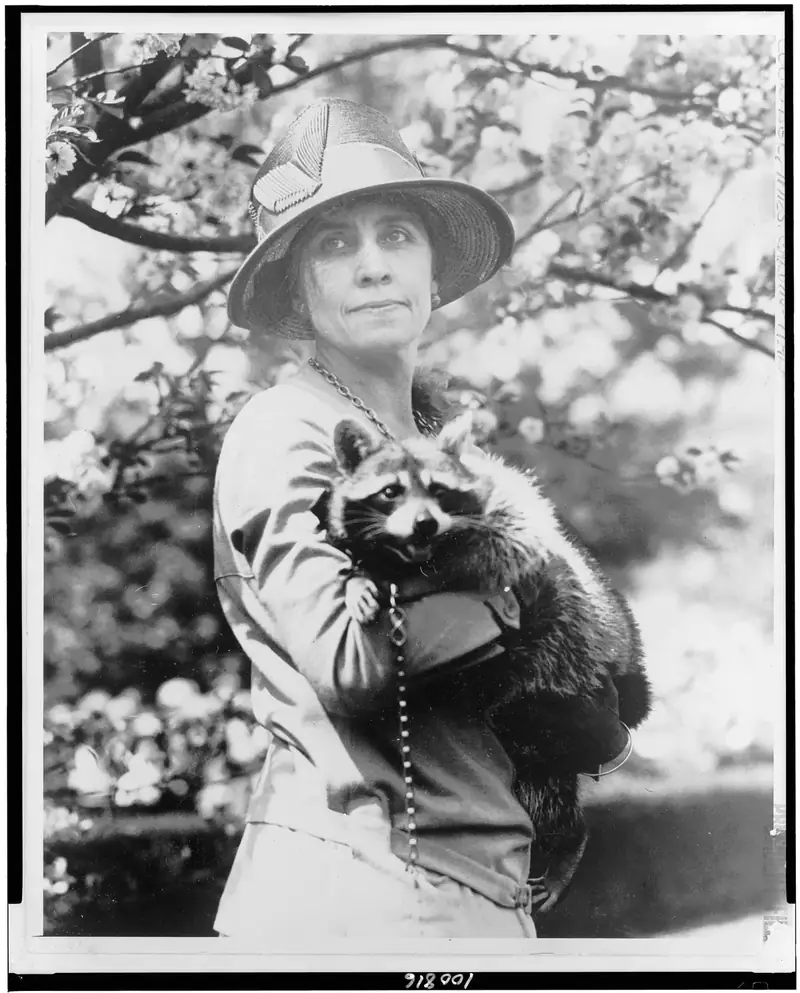
The Coolidges decided not to eat her. The Ringer writes that the president "simply could not bear to eat the raccoon." The family kept her instead. According to The Ringer, that Christmas they named her Rebecca and gave her a collar. CBS News reports the handmade collar read "White House Raccoon."
Life as a White House pet
Rebecca was no ordinary house guest. The details below come from the accounts we read, and some come from memoirs and letters written long after the fact.
- A home of her own. Boston.com reports the family built her a treehouse and let her roam indoors. In a January 1927 letter to housekeeper Ellen Riley, quoted by The Ringer, Grace Coolidge described Rebecca as "snug and contented as can be."
- Walks and baths. Margaret Truman, the daughter of a later president, wrote that Coolidge took evening walks with Rebecca "waddling along at the end of a leash," according to Boston.com. Grace said Rebecca liked a bathtub with a little water and a cake of soap for an hour or more.
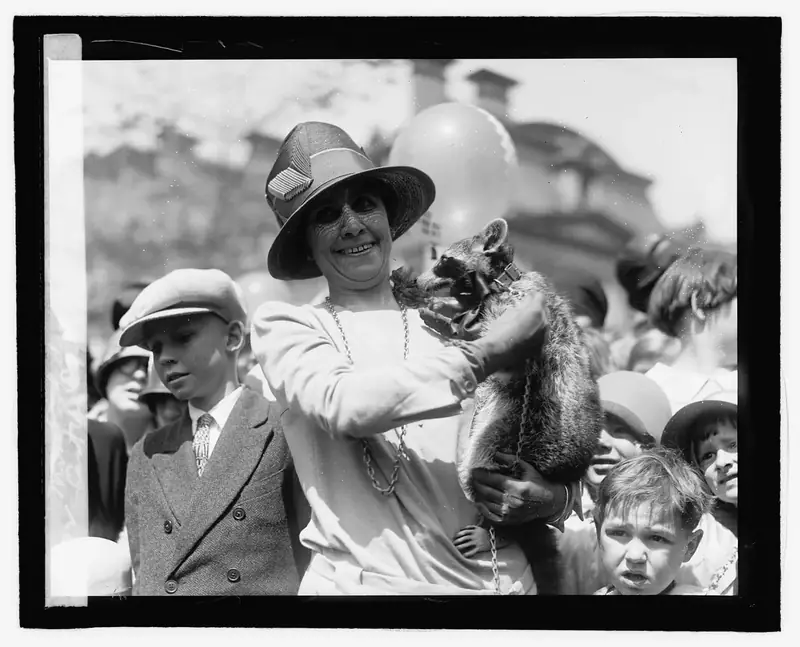
- A public appearance. Grace Coolidge brought Rebecca to the White House Easter egg roll in 1927. The Library of Congress photo at the top of this page is dated April 18, 1927.
- A tough personality. CBS News says the Cleveland Plain Dealer called her "the most obstreperous of all Coolidge's pets." Obstreperous means noisy and hard to control. Grace Coolidge herself called Rebecca "a little overbearing and dictatorial," Boston.com reports.
- A failed match. The family tried to find her a mate, a male raccoon named Reuben. CBS News says the two "did not get along at all." Wikipedia adds that Reuben escaped often and eventually disappeared.
The Coolidge menagerie
Rebecca was not the Coolidges' only unusual animal. CBS News notes that people often sent the president animals as gifts. These included lion cubs, a black bear, a wallaby and a pygmy hippo from tire maker Harvey Firestone. Most of those animals went to zoos. Rebecca, by contrast, lived in the house.
Where she ended up
When the Coolidges left Washington in 1929, Rebecca did not go with them. Boston.com says she lived out her days at the zoo. Wikipedia says she was given to the zoo's quarters in Rock Creek Park, which is now the National Zoo, and died shortly after. The Ringer, quoting Riley's 1937 magazine article, says she was left at the zoo after she ran away during a summer trip, and that she "got sick and died" there. Exact dates are not given in the sources we read, so we do not know when she died.
Why we still tell this story
Rebecca's tale is often called the first "Thanksgiving pardon," a century before the modern turkey pardon at the White House. Be careful with that label. The turkey ceremony is a separate and much later tradition, and the Coolidges did not hold any ceremony. They simply could not go through with dinner.
What the story shows is how much presidents' private lives drew public affection. A raccoon with a name tag became part of the nation's holiday memory.
What we still don't know
Accounts differ on small points, and many were written years later. Who sent the raccoon, how long Rebecca lived and exactly how she died are not settled in the sources we read. We have kept to details that appear in more than one account or that are clearly attributed.
Did you remember?
- Did your family ever take in an animal that was meant for something else, or one that showed up as a surprise?
- What is the oddest Thanksgiving tradition you remember from your own family?
How we checked this story
We read 5 reputable sources, wrote this article in our own words, and link every one of them below. Last checked November 22, 2026.
- CBS News, "Presidential pets: Calvin Coolidge's White House raccoon": Hager interview and quote, Mississippi supporter, collar, Plain Dealer line, Reuben, other gifts
- Boston.com, "Calvin Coolidge raccoon Thanksgiving pardon" (Nov. 26, 2024): November 1926 arrival, "toothsome flavor," treehouse, leash walks, bathtub, Grace's description, zoo
- The Ringer, "Rebecca the raccoon, Thanksgiving, White House" (Nov. 22, 2017): naming and collar at Christmas, Grace's 1927 letter, Riley 1937 article, death at the zoo
- Wikipedia, "Rebecca (raccoon)": Easter egg roll date, Reuben's fate, Rock Creek zoo quarters
- Library of Congress, National Photo Company Collection, "Mrs. Coolidge & raccoon (Rebecca), Easter egg rolling, 4-18-27": photo and its April 18, 1927 date
Spot an error? See our corrections policy.