High-dose flu shot linked to lower Alzheimer's risk: what the study really found
A large study found fewer Alzheimer's diagnoses after the stronger flu shot made for people 65 and older. The difference is real but smaller than some headlines suggest, and it is not proof.
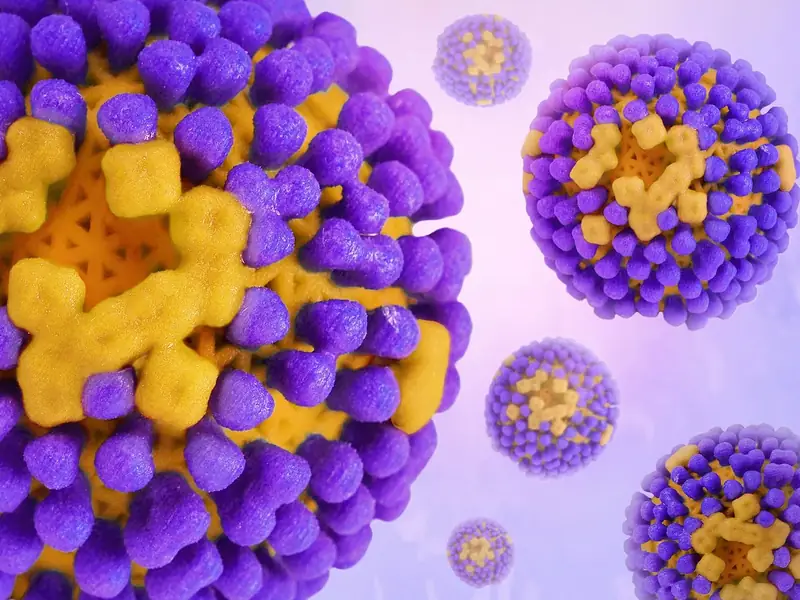
A study making the rounds this month links the high-dose flu shot, the stronger version made for people 65 and older, to a lower chance of being diagnosed with Alzheimer's disease. ScienceDaily featured it in November under a headline about a "nearly 55% lower" risk. The research itself was published in the journal Neurology earlier this year, online on April 1, by a team at UTHealth Houston (the University of Texas Health Science Center at Houston).
The finding is interesting and worth knowing about. But the 55% figure needs some context, and the study cannot show that the shot itself protects the brain. Here is what the researchers actually reported.
What the researchers did
The team used a large US health insurance claims database called IQVIA PharMetrics Plus, covering 2014 to 2019. Claims are the billing records insurers keep, so the study could see who got which flu shot and who was later diagnosed with Alzheimer's, but not much about their daily lives.
According to the paper, everyone included was 65 or older and had no earlier sign of memory problems in their records. It compared 120,775 people who got a high-dose flu shot with 44,022 who got a standard-dose shot, and followed them for up to three years. UTHealth's release describes the group as "nearly 200,000" adults. That count appears to reflect the fact that some people entered the study more than once, in different flu seasons; the paper counts about 239,000 such entries.
Importantly, everyone in the study got a flu shot. The question was only whether the stronger dose made a difference. The high-dose vaccine contains about four times as much of the active ingredient as a standard shot, UTHealth says.
What it found
The paper reports that people who got the high-dose shot had a significantly lower risk of an Alzheimer's diagnosis during the first 25 months afterward. After that, the difference was no longer statistically clear.
In plain numbers, the gap was small. At 25 months, the risk was about 0.54 percentage points lower in the high-dose group, or roughly 5 fewer diagnoses for every 1,000 people. Put another way, the paper estimates that about 185 people would need the high-dose shot instead of the standard one for one fewer Alzheimer's diagnosis in that time. In relative terms, the paper's own table shows the high-dose group's risk at month 25 was about 11% lower than the standard-dose group's.
The effect looked stronger in women. The paper found women had a lower risk from months 1 to 13, while for men a lower risk showed up only between months 17 and 24, and only in one of the two ways the team analyzed the data.
About that "55%" headline
UTHealth's release and the ScienceDaily story say the standard-dose shot was linked to about a 40% lower risk and the high-dose shot to "nearly 55%." Those figures do not appear in the Neurology paper's results that we read. The 40% comes from the same group's earlier research, which compared vaccinated people with unvaccinated people, according to UTHealth. This new study did not include unvaccinated people at all.
So the 55% is not a direct high-dose versus standard-dose result from this study. The direct comparison, from the paper, is the much smaller gap described above. Coverage by News-Medical and the medical news site NeurologyLive also reports the result in those smaller terms.
A link, not proof
This was an observational study, meaning researchers looked back at records rather than randomly assigning people to one shot or the other. The authors say their results should be read as "associative rather than definitively causal." The journal rated it Class II evidence, a step below the strongest kind.
Other explanations are possible, and the authors name several limits:
- Missing information. The database had no details on income, education, lifestyle, biomarkers (lab or scan signs of Alzheimer's) or deaths. People who seek out the high-dose shot might differ in ways the records do not capture.
- Hidden early dementia. When the team started the clock one month later, the lower risk in months 1 to 7 disappeared. The authors say the early effect may partly reflect dementia that already existed but had not been diagnosed yet.
- Imperfect diagnoses. Billing codes are not the same as a specialist's diagnosis. When the team dropped vague dementia codes, the difference was no longer significant.
- Short follow-up and a narrow group. Three years is short for a disease that develops over many years, and commercial insurance records may not reflect people on traditional Medicare.
The paper also points to strengths. Comparing vaccinated people with other vaccinated people avoids some of the "healthy person" bias that comes from comparing them with people who skip shots, and a test on unrelated conditions found no difference.
Why might a stronger flu shot matter? The researchers suggest two ideas, neither tested here: preventing more flu infections could mean less inflammation, including in the brain, or the vaccine could have broader effects on the aging immune system. They say more research is needed.
Getting a flu shot this season if you are 65 or older
Whatever this study ultimately means for Alzheimer's, the CDC already recommends a stronger flu vaccine for this age group, for flu protection.
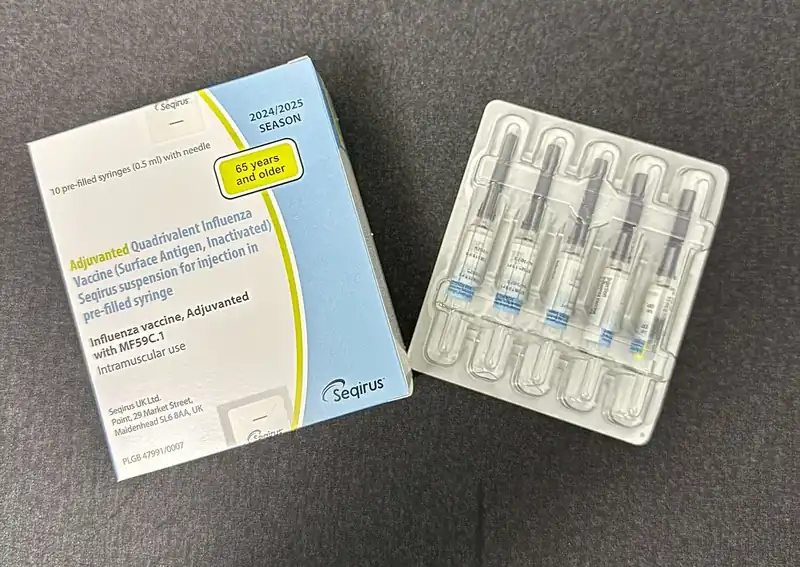
- Which shot. The CDC preferentially recommends one of three types for people 65 and older: high-dose (Fluzone High-Dose), recombinant (Flublok) or adjuvanted (a shot with an added ingredient that boosts the immune response). If none is available, the CDC says to get a standard-dose shot instead. People 65 and older should not get the nasal spray.
- Timing. The CDC says September and October are generally good times, and it takes about two weeks for protection to build. If you have not had yours yet, ask your doctor or pharmacist.
- What's new this year. The CDC says all three virus strains in the 2026-27 vaccines were updated, including better protection against the H3N2 strain that spread widely last season.
- Where. According to the CDC, vaccines may be available at doctor's offices, pharmacies, health departments, community clinics and workplaces.
- Cost. Medicare Part B covers one flu shot per season, and you pay nothing if your provider accepts Medicare's approved payment, according to Medicare.gov.
- While you are there. The CDC says a pneumococcal (pneumonia) vaccine can be given at the same visit, if you are due.
If you get flu symptoms, the CDC advises calling your health care provider right away, because people 65 and older benefit from prompt antiviral treatment.
What do you think?
- Did you know there is a stronger flu shot made for people 65 and older, and have you had one?
- Would a study like this change how you think about your yearly flu shot?
How we checked this story
We read 10 reputable sources, wrote this article in our own words, and link every one of them below. Last checked November 17, 2026.
- Bukhbinder AS, Schulz PE, et al., "Risk of Alzheimer Dementia After High-Dose vs Standard-Dose Influenza Vaccination," Neurology (2026): study design, group sizes, 25-month result, risk difference, risk ratio, number needed to treat, sex differences, limitations, sensitivity analyses, Class II rating
- ScienceDaily, "Stronger flu shot linked to nearly 55% lower Alzheimer's risk": the headline figures and how the story is being reported
- UTHealth Houston, "Risk of Alzheimer's dementia significantly reduced after high-dose influenza vaccination compared to the standard dose, study finds" (via EurekAlert): 40% and 55% figures, earlier research, four-times dose, "nearly 200,000"
- NeurologyLive, "High-dose influenza vaccination linked to lower Alzheimer dementia risk in older adults": independent summary of results, possible mechanisms, evidence class
- News-Medical, "High-dose flu shots linked to lower Alzheimer's dementia risk in older adults": independent summary of results, authors' wording on causation
- CDC, "Flu and People 65 Years and Older": preferred vaccines for 65+, no nasal spray, timing, pneumococcal vaccine, antiviral treatment
- CDC, "Key Facts About Seasonal Flu Vaccine": two weeks for protection to develop
- CDC, "2026-2027 Flu Season": updated vaccine strains this season
- CDC, "Where to Find Vaccines": places to get vaccinated
- Medicare.gov, "Flu shots": Part B coverage and $0 cost with assignment
Spot an error? See our corrections policy.