Gift card draining: how thieves empty cards before you buy them
Thieves can tamper with gift cards on store racks, so a card that looks sealed may still be emptied after you load it. Here is how it works and how to buy safely.
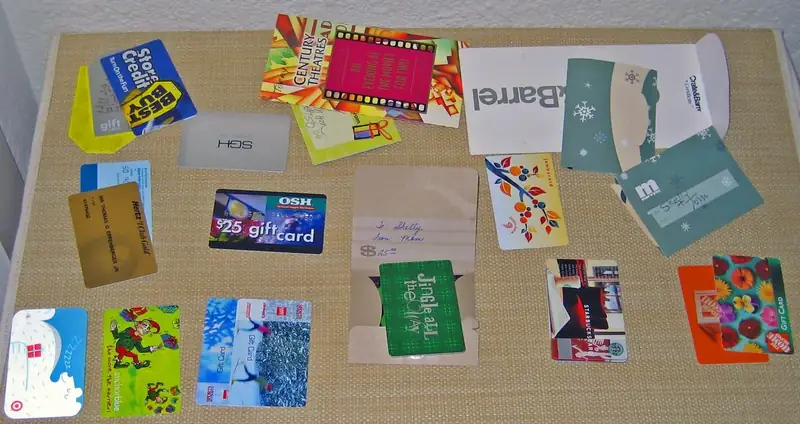
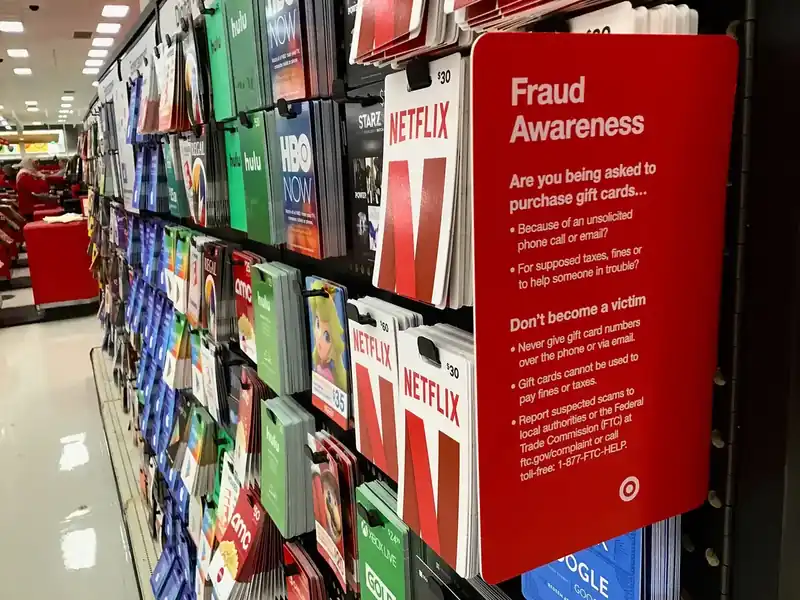
Gift cards are an easy present. They are also a target. Officials warn about a scam called "card draining," in which a thief tampers with a card while it still sits on the store rack. You buy it, the store loads money onto it, and the thief takes the money before the person you gave it to can spend a cent.
The warning is timely. Money magazine reported on Nov. 4 that Deloitte's 2026 holiday survey found 54% of shoppers plan to buy gift cards this season. Here is how the trick works, what to look for, and what to do if a card turns out to be empty.
How card draining works
The Washington, D.C. Attorney General's office issued a consumer alert on Dec. 15, 2025. It describes three ways a thief can drain a card without ever contacting the buyer:
- Scratch and re-cover. The thief takes a card off the rack, scratches off the coating on the back to reveal the code, and covers it up again. After you buy and activate the card, the thief uses the code online to spend the money.
- Barcode swap. The thief puts a new barcode on the card, one linked to a card that is already active. When the store loads your money, it goes to the thief's card instead.
- Code scanning. The thief scans the codes of unsold cards and waits until someone buys one.
The Federal Trade Commission (FTC) describes the same pattern. In a Dec. 19, 2024 consumer alert, it says scammers can get a card's number and PIN before you buy it, often by removing protective stickers or scratching off the back. Once you put money on the card, they can drain it without ever holding it.
The D.C. alert makes one point very plainly: even a gift card that appears untouched could still be unsafe to buy. A careful thief can make a card look normal.
Why it is hard to trace
NBC Chicago, in a story first produced by NBC Bay Area with the FBI's help, explained where the money goes. According to the report, stolen card accounts are sold online by overseas thieves for less than face value. A buyer in the U.S. may pay cash for a discounted card without knowing it was stolen. The FBI's special agent in charge in San Francisco, Robert Tripp, said the account can pass through "two, three, four hands" and become "virtually untraceable."
The report, published Feb. 26, 2024, described real victims. A Fremont, California, woman said a $500 Target gift card from her boss was declined at the register, and customer service told her the balance was zero. A San Ramon woman bought gift cards for engagement parties, and a $50 card she gave away was empty. When the other guest of honor checked her own $50 card, it also showed zero. NBC said it did not know exactly how their money disappeared, and had received dozens of similar complaints.
In the same story, prosecutors in Sacramento County said a man was arrested at a Target while putting gift cards on the rack. Deputies said they found more than 5,000 Target gift cards in his car. The case was still being prosecuted when the story ran, and his lawyer said that having the cards did not automatically show criminal behavior. Target told NBC that its teams regularly inspect cards for signs of tampering and called it an industry-wide issue.
How to buy gift cards more safely
No single step is perfect. Together, the advice from the FBI, the FTC and the D.C. Attorney General cuts the risk.
- Buy from behind the counter. The FBI advice in the NBC story is to buy from behind a counter or from a locked case. The D.C. office suggests stores that lock cards in racks, keep them at the register, or add the barcode only at the time of purchase.
- Inspect the card. Look at the packaging, the PIN area and the barcode. Watch for loose packaging, scratches, smudges, or a sticker that looks added or removed.
- Speak up. The FTC says to tell a cashier or manager if a card looks tampered with. Thieves may tamper with cards in batches, so if one looks bad, consider a different store.
- Pay by credit card if you can. The FTC says this gives you the most protection, because if you file a chargeback, the card issuer will investigate and you may get your money back.
- Keep the card details and the receipt. The FTC says a copy of the card and the store receipt help you report a card that does not work or has no money on it. The D.C. office adds that you should register the card with the retailer if possible.
- Check the balance right away. The D.C. alert says to check the balance in the store or on the company's website to confirm the money is there. The FBI advice also says to use a card quickly, "ideally faster than the thieves."
- Tell the person you gift it to. Suggest they check the balance and spend it soon.
If a card is empty
Act fast. The FTC says the sooner you report, the better.
- Keep the card, the packaging and the receipt.
- Report it to the company that sold or issued the card.
- If you paid by credit card, call the card company and ask about a chargeback.
- Report it to the FTC at ReportFraud.ftc.gov. The FBI also takes reports at IC3.gov, and Tripp told NBC that even small reports may help investigators connect larger networks.
- Consider a report to local police. The D.C. alert recommends it.
Don't confuse this with a different gift card scam
Draining is different from the scam in which a caller or message demands that you pay with gift cards. The FTC says that anyone who demands payment by gift card is a scammer. That includes someone claiming to be a government agency, a boss or a family member. Real agencies do not ask for gift cards. Draining is quieter, because the buyer does nothing wrong and may not learn about it for weeks.
What we still don't know
No agency we found publishes a national count of how many cards are drained each year, so the true size of the problem is unclear. Money magazine also cites a 2025 AARP survey saying about a third of adults reported giving or getting a gift card with no balance. The magazine notes that not every empty card means fraud. Some people simply spend the money and forget.
If gift cards are still the best present for someone on your list, the steps above help. A store-issued card handed over at the register, or an e-gift card sent straight from the retailer, avoids the rack altogether.
What do you think?
- Have you ever given or received a gift card that turned out to be empty? What did the store do?
- Does your local store keep gift cards behind the counter or out on an open rack?
How we checked this story
We read 5 reputable sources, wrote this article in our own words, and link every one of them below. Last checked November 22, 2026.
- D.C. Office of the Attorney General, "Attorney General Brian Schwalb Issues Alert Warning District Residents About Gift Card Scams": the three draining methods, the "appears untouched" warning, buying and reporting advice
- Federal Trade Commission, "Check out gift cards before you buy them": how tampering works, credit card and receipt advice, reporting at ReportFraud.ftc.gov
- NBC Chicago, "How thieves drain your gift card balance for untraceable cash": victims, Sacramento case, FBI tips, IC3.gov
- Money, "These Are the 5 Biggest Holiday Shopping Scams to Watch Out for in 2026": Deloitte 54% figure, AARP survey
- Federal Trade Commission, "A way to spot scams: how someone asks you to pay": gift card payment demands are a scam
Spot an error? See our corrections policy.