LIFE magazine turns 90 on Nov. 23, and a new print issue arrives that same day
The first LIFE cost a dime in 1936 and later reached a circulation of more than 8 million. Ninety years later, it is coming back as a $45 quarterly. Here is the story, then and now.

For millions of American families, LIFE was the magazine on the coffee table. It came every week, it was big, and it was full of photographs: war, moon shots, movie stars, and ordinary people. Many of us learned what the world looked like by turning its pages.
The first issue came out 90 years ago, on Nov. 23, 1936. On that same date this year, Monday, Nov. 23, 2026, LIFE is scheduled to return as a regular print magazine for the first time in about 25 years, according to The New York Times. Here is how the magazine started, why it faded, and what the new version will be like.
A dime for the world in pictures
LIFE was Henry Luce's third magazine. He had already started Time in 1923 and Fortune in 1930, according to Princeton University Library and American Heritage magazine. His new idea was a weekly built around photographs, at a time when most magazines were mostly words.
There was already a magazine called Life. It was a humor and general-interest weekly that had been struggling through the Great Depression. American Heritage reports that Luce bought it for $92,000, mostly to get the name.
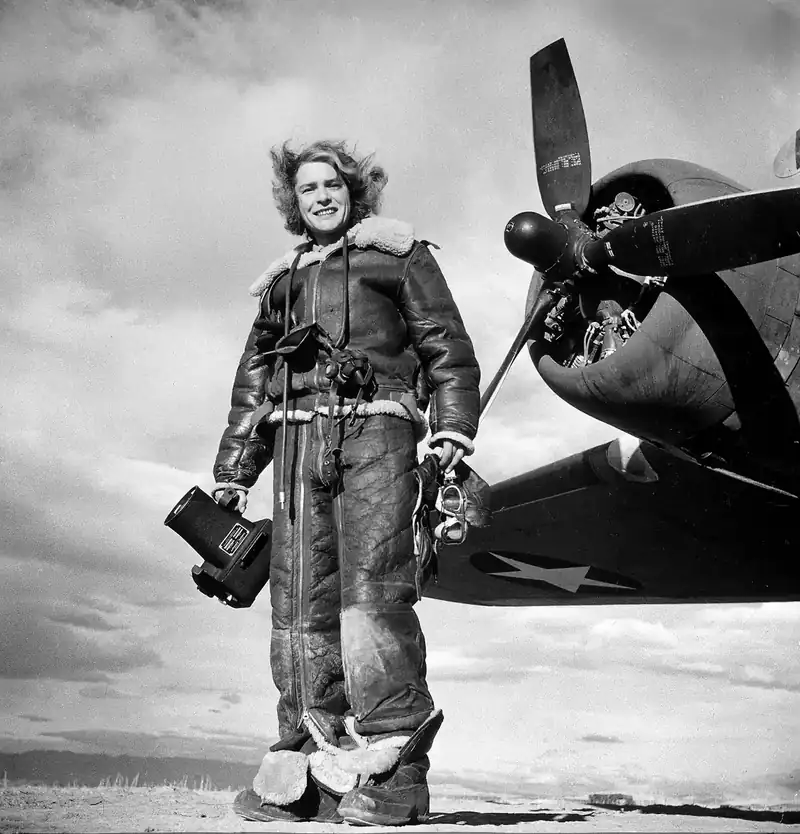
The first issue of the new LIFE sold for 10 cents. Its cover was a black-and-white photograph by Margaret Bourke-White of the giant concrete spillway at Fort Peck Dam in Montana, a New Deal project. (A spillway is the channel that lets extra water run safely past a dam.) Inside, Princeton's library says, were five pages of photographs by Alfred Eisenstaedt and dozens of other photo-essays. A photo-essay tells a story mostly through a series of pictures.
A hit that lost money at first
Readers loved it right away. The New York Times says the first issue sold out instantly. The early numbers vary a little by source: American Heritage says the first 435,000 copies sold out almost immediately, while Princeton's library puts circulation at 380,000 the first week. Both agree on what came next. By early 1937, only about four months later, LIFE was selling about a million copies of each issue.
Success had a catch. American Heritage reports that each copy cost about 15 cents to make but brought in only about 6 cents, so the more LIFE sold, the more money it lost at first. The magazine did not turn a profit until 1939, when circulation passed 2.4 million. Circulation means the number of copies sold or sent to subscribers.
At its peak in the 1960s, LIFE's circulation passed 8 million copies, according to The New York Times and History.com. And because families passed copies around, far more people than that saw each issue.
The pictures we remember
LIFE's photographers became famous in their own right. Besides Bourke-White and Eisenstaedt, its pages carried work by Robert Capa, W. Eugene Smith, Gordon Parks and Carl Mydans. A few of the images many readers will remember, as listed by American Heritage:
- V-J Day, 1945. Eisenstaedt's photo of a sailor kissing a nurse in Times Square at the end of World War II. American Heritage calls it the most widely reproduced of all LIFE's photos.
- Spain, 1930s. Robert Capa's picture of a soldier in the Spanish Civil War at the instant he was shot.
- Harlem, 1948. Gordon Parks's portrait of a young gang leader in New York.
- Vietnam, 1969. A June 1969 spread on 217 soldiers killed in Vietnam in a single week.
Why the weekly stopped
Television changed everything. History.com says LIFE lost readers and advertising money to TV, and American Heritage adds that rising postal rates made mailing a heavy weekly magazine more expensive. LIFE stopped publishing weekly in 1972. According to TIME, the last weekly cover was dated Dec. 29, 1972.
It was not the end. LIFE came back as a monthly at the end of the 1970s and kept going until 2000, when its owner, Time Inc., announced it would stop regular publication, according to The New York Times. (The Times dates the monthly's return to 1978; American Heritage says 1979.) History.com notes that from 2004 to 2007 LIFE also appeared as a weekly supplement tucked inside newspapers. Since then it has turned up mostly in special issues.
The new LIFE: what to know
The relaunch is the work of Bedford Media, a company led by model and entrepreneur Karlie Kloss and Joshua Kushner. The Times reports that Kloss licensed the rights to publish LIFE in 2024 from Dotdash Meredith, the company now called People Inc. Imaging Resource, a photography news site, reports that Dotdash Meredith keeps ownership of LIFE's famous photo and story archives.
"What made Life extraordinary was its ability to make the world feel closer," Kloss told The New York Times, as quoted by PhilSTAR Life, adding that the new team wants to protect that legacy.
Here are the key facts, from The New York Times, Imaging Resource and LIFE's own website:
- The first issue. It is called "Where Are We Now?" and is due Nov. 23.
- The price. $45 an issue, according to The New York Times and Imaging Resource, which says it will be sold in select bookstores and newsstands in the US. LIFE's website offers a yearly subscription of four issues for $149, and a "founding membership" with extras for $356 a year. It also says one collectible cover is only for subscribers and members.
- The size. It is big: 11 by 16 inches and nearly 250 pages. The Times says 250; LIFE's website says 248 and "nearly 3 lbs."
- How often. Four times a year, not weekly.
- No regular ads. Imaging Resource reports that the print magazine will not carry conventional advertising and will rely on subscriptions, memberships and selected brand partnerships instead.
- What's inside. LIFE's website lists stories on actress Jane Fonda, actor John Malkovich, figure skater Alysa Liu, inventor Ray Kurzweil, NASA's chief, new West Point graduates, and a Las Vegas DMV office. According to a LIFE post quoted by Imaging Resource, the first of six covers features a commercial fisherman in Alaska.
- Online. A free website with stories, photos, documentaries and video is planned alongside the print edition, Imaging Resource reports; the Times also mentions a website, short-form video and documentary films.
The editor is Hugo Lindgren, and the creative director, the person in charge of how the magazine looks, is Richard Turley, Imaging Resource reports.
What we still don't know
The big question is whether enough people will pay $45 for a print magazine in an age of free photos on every phone. The original LIFE was cheap and everywhere; the new one is a collector's item by design. LIFE's site says the first issue "is printed once. No reprints." It is also not yet clear how easy it will be to find on newsstands outside big cities.
If you are curious, check a large bookstore after Nov. 23, or see the details at new.life.com. And if you still have a stack of old LIFE issues in the attic, you are holding a piece of how America saw itself for most of the 20th century.
Did you remember?
- Did your family get LIFE in the mail, and what issue or photo do you still remember?
- Would you pay $45 for a big printed magazine today, or do you get your pictures of the world on a screen now?
How we checked this story
We read 8 reputable sources, wrote this article in our own words, and link every one of them below. Last checked November 19, 2026.
- The New York Times via The Boston Globe, "Life Magazine, a chronicler of 20th-century America, rises again": relaunch date, $45 price, 250 pages, quarterly, Bedford Media and Dotdash Meredith licence, 1936 cover, sold out, 8 million peak, 1972, 1978 to 2000
- PhilSTAR Life, "American news magazine 'Life' returns to print 90 years after first issue": issue title, Karlie Kloss quote to The New York Times
- Imaging Resource, "LIFE Magazine to Publish Again 90 Years After Its Debut": 11-by-16-inch format, quarterly, no conventional print ads, free digital platform, archive ownership, editor and creative director, Alaska fisherman cover, famous photographers
- LIFE, official website: issue title, release date, 248 pages, size and weight, subscription and membership prices, subscriber-only cover, contents, "printed once" quote
- History.com, "First issue of LIFE is published": first issue and cover, humor magazine roots, 8 million peak, television and 1972, 2004 to 2007 newspaper supplement
- Princeton University Library Graphic Arts, "Life Begins": 10-cent price, Time 1923 and Fortune 1930, Eisenstaedt pages, 380,000 first week, a million four months later
- American Heritage, "The Origins of Life": $92,000 purchase, 435,000 first copies, a million by March 1937, 15 cents cost vs 6 cents, profit in 1939 at 2.4 million, famous photos, postal rates, 1979 monthly
- TIME, "LIFE at 80": Fort Peck cover story, last weekly cover dated Dec. 29, 1972
Spot an error? See our corrections policy.