Thanksgiving turkey safety: thaw times, the 165°F rule and how long leftovers last
The USDA's new Thanksgiving guide gives exact thawing times, the temperature that makes a turkey safe, and a four-day limit on leftovers.
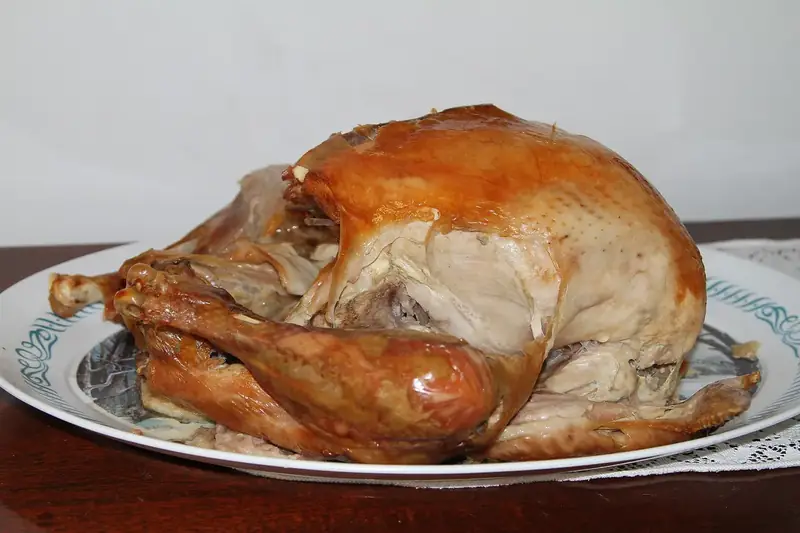
Thanksgiving is Thursday, Nov. 26, and the U.S. Department of Agriculture (USDA) has put out its yearly food safety advice. The short version: thaw the turkey in a safe way, cook it to 165 degrees Fahrenheit, and get leftovers into the fridge within two hours.
These rules matter because food poisoning is common. The Centers for Disease Control and Prevention (CDC) estimates that 48 million people in the U.S. get sick from foodborne illness every year. About 128,000 are hospitalized and 3,000 die. Adults 65 and older face higher risk, so the details below are worth a few minutes before the big meal.
Step one: thaw it safely
The USDA's Food Safety and Inspection Service released its guide, "The Recipe for a Safe Thanksgiving," on Nov. 13. It lists three safe ways to thaw a frozen turkey. A local report by Valley News Live on the guide adds the microwave option.
- In the refrigerator. Allow about 24 hours for every 4 to 5 pounds. A 20-pound bird can need four to five days. Valley News Live reports a thawed turkey can wait in the fridge one to two days before cooking.
- In cold water. Allow 30 minutes per pound, and change the water every 30 minutes. Cook the turkey right after thawing.
- In the microwave. Valley News Live says this works for a small turkey or a turkey breast, on the defrost setting. Cook it right away.
The USDA is blunt about one thing: never thaw a turkey on the counter. The outside warms up while the middle is still frozen, and bacteria can multiply.
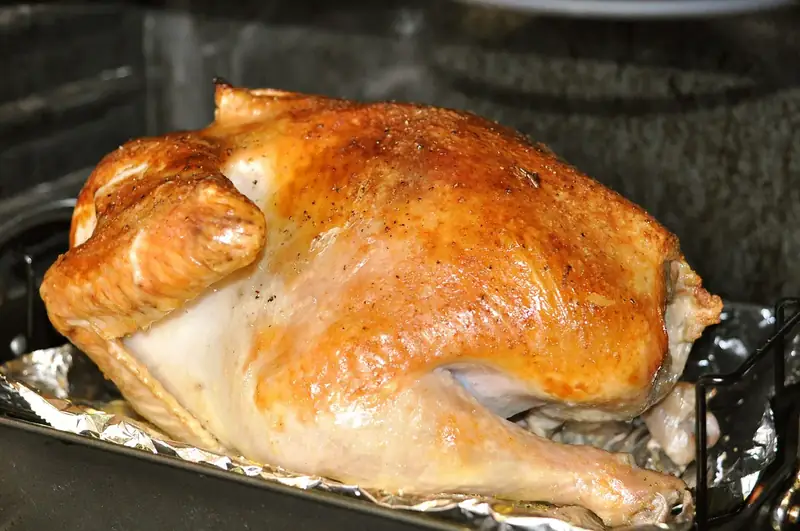
Step two: cook it to 165°F
The USDA says the safe minimum internal temperature is 165°F. The CDC agrees, and says a food thermometer is the only way to tell if food is safely cooked. Color and cooking time are not reliable.
The USDA says to check three spots: the thickest part of the breast, the innermost part of the wing, and the innermost part of the thigh. If you cook stuffing inside the bird, the stuffing must also reach 165°F. The USDA recommends cooking stuffing separately.
Step three: watch the clock after dinner
Bacteria grow fastest between 40°F and 140°F. The USDA and the CDC call this the "Danger Zone." Keep cold food at 40°F or below and hot food at 140°F or above.
- The two-hour rule. Refrigerate perishable food and leftovers within 2 hours. The USDA says to throw away perishable food left out longer. The CDC says the limit is 1 hour if the room is above 90°F.
- Cool it fast. Divide big portions into smaller containers so they chill faster. The CDC suggests several clean, shallow containers.
- Four days in the fridge. The USDA says refrigerated leftovers are safe for up to four days.
- Freezer. At 0°F or below, leftovers stay safe indefinitely, though the quality can fade over time.
- Reheat to 165°F. Do this before serving leftovers again.
Extra advice for older adults
According to the CDC, adults 65 and older are more likely to get sick from certain germs spread through food, including Salmonella, Campylobacter and Listeria. The CDC says nearly half of people in this age group who have a lab-confirmed illness from Salmonella, Campylobacter, Listeria or E. coli end up in the hospital.
That makes the thermometer more important, not less. The CDC lists poultry cooked to 165°F as a safer choice for older adults and raw or undercooked poultry as a riskier one. North Dakota's health department, cited by Valley News Live, also suggests staying home if you are sick, washing hands often, and asking a health care provider about recommended vaccines.
If you are hosting someone with a weak immune system or a health condition, ask their doctor if they have extra food precautions.
Other handy tips
- Wash your hands. Use soap and water for at least 20 seconds, and keep raw turkey away from other foods. The CDC also says not to wash raw poultry.
- Check your fridge. The CDC says the refrigerator should be at 40°F or below and the freezer at 0°F or below.
- Call the hotline. The USDA Meat and Poultry Hotline is 1-888-674-6854. On Thanksgiving Day it will be open 8 a.m. to 2 p.m. Eastern. You can also email [email protected].
What we don't know
The CDC does not give leftover-day counts or thaw-hour figures on the pages we read. Those numbers come from the USDA. The CDC's illness totals also cover all foodborne illness, not only turkey or holiday meals, so they do not tell us how many cases come from Thanksgiving.
What do you think?
- What is your family's best trick for thawing the turkey on time?
- Do you cook your stuffing inside the bird or separately, and has that ever changed after a food safety scare?
How we checked this story
We read 5 reputable sources, wrote this article in our own words, and link every one of them below. Last checked November 20, 2026.
- USDA, "The Recipe for a Safe Thanksgiving" (Nov. 13, 2026): thaw times, 165°F, check spots, Danger Zone, two-hour rule, four-day leftovers, hotline hours
- CDC, "Facts About Food Poisoning": 48 million sick, 128,000 hospitalized, 3,000 deaths
- CDC, "Safer Food Choices for Adults 65 and Older": higher-risk germs, nearly half hospitalized, poultry at 165°F
- CDC, "Preventing Food Poisoning": thermometer, 1-hour rule above 90°F, shallow containers, fridge and freezer temperatures, no washing poultry
- Valley News Live, "How to thaw, cook and store your Thanksgiving turkey safely, according to the USDA" (Nov. 18, 2026): microwave thawing, 1-2 days in fridge once thawed, North Dakota health advice
Spot an error? See our corrections policy.