Crows made split-second choices in a lab test, about twice as fast as people
In a new study in the journal Science, two carrion crows judged moving dots in under a quarter of a second, and their brain signals looked a lot like ours.
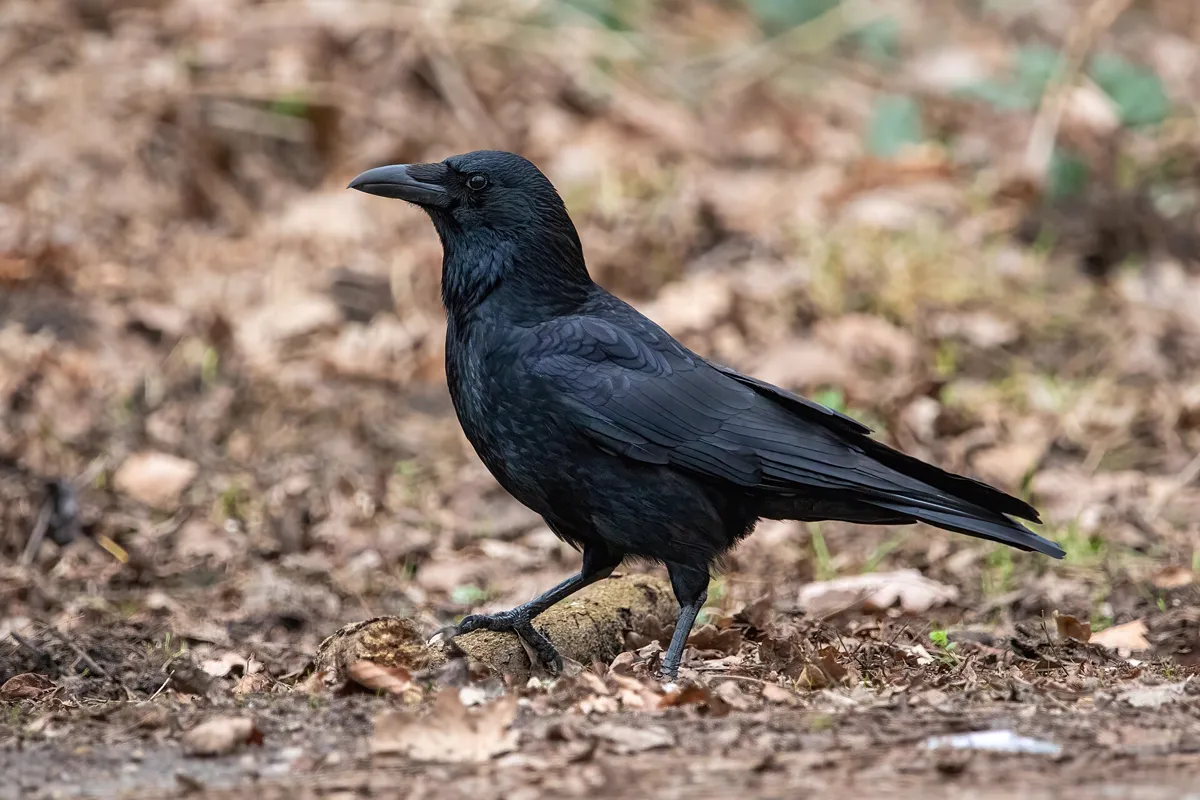
Crows already have a reputation for brains. They use tools, remember faces and solve puzzles. A new study from Germany adds something else to the list: in one kind of test, they make up their minds remarkably fast.
The research, published Oct. 22 in the journal Science, comes from Philipp Schmidbauer and Andreas Nieder at the Institute of Neurobiology at the University of Tübingen. The paper is titled "Ultrarapid decision-making in an avian brain." Avian simply means "of birds."
The test, and how fast the crows were
The crows took part in a classic psychology experiment that has been used with people and monkeys for years, but, according to ScienceAlert, never before with crows. A touchscreen showed a cloud of small white dots on a black background. Most of the dots drifted either left or right, and the bird's job was to decide which way and peck a target on that side of the screen.
A correct answer earned a mealworm. The crows set their own pace, so nothing forced them to hurry. ScienceAlert reports that each of the two birds, both adult males, went through more than 100 training sessions before the researchers began collecting data.
On average, the crows made their choice and pecked in about 235 milliseconds. A millisecond is a thousandth of a second, so that is less than a quarter of a second from seeing the dots to answering.
Speed did not make them sloppy. According to the University of Tübingen, when the motion was easy to see, the birds were right nearly 100 percent of the time. When the pattern was hard to read, they still did better than random guessing. The authors say this is roughly twice as fast as monkeys or humans have shown on similar tasks in earlier studies, a comparison that comes with a catch we will get to below.
A look inside the crow's brain
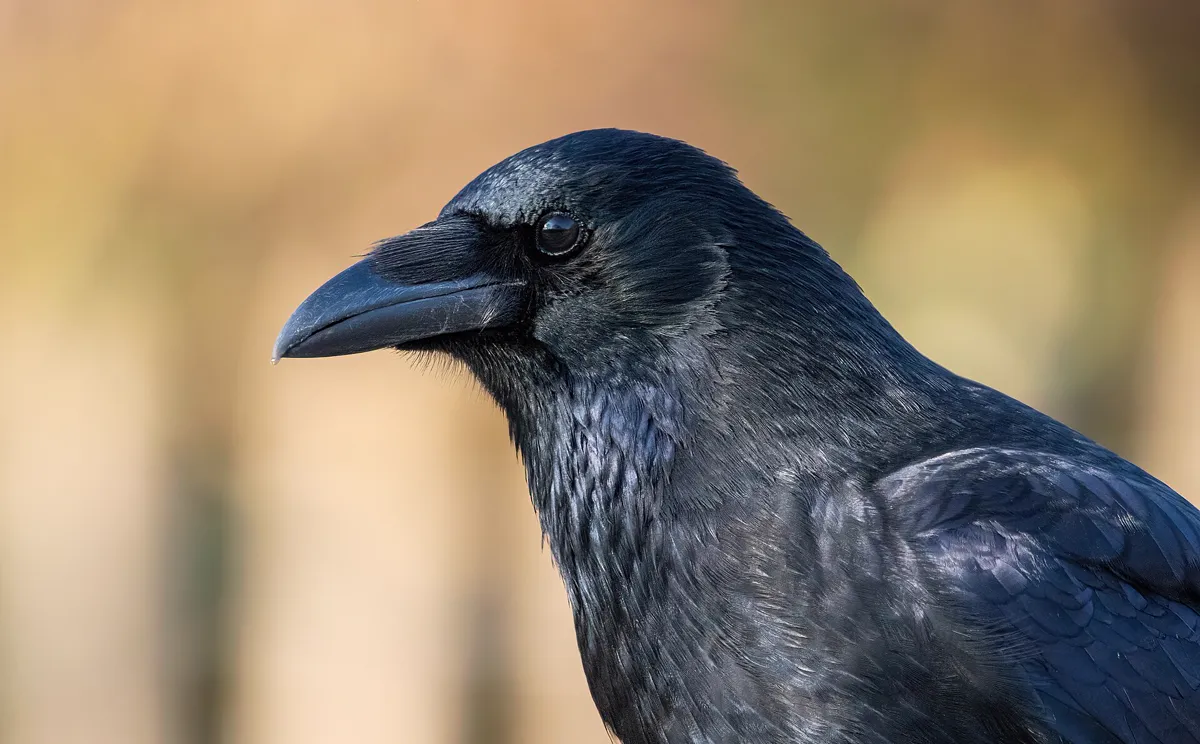
The team also listened in on individual brain cells while the birds worked. ScienceAlert reports they recorded 248 neurons in a region called the nidopallium caudolaterale. That is a mouthful, but the university describes it as a thinking-and-planning area that does a job similar to the prefrontal cortex, the part of the human brain just behind the forehead.
Cells that tracked the direction of the dots began to respond differently about 70 milliseconds after the dots appeared. Their activity then built up gradually, like a jar filling with water, until it reached a tipping point. At that point the crow pecked. Live Science reports that this early signal came about 170 milliseconds before the peck, so researchers could predict a bird's choice before it moved.
That build-up-to-a-threshold pattern is the same basic process scientists have long seen in primates, the group that includes monkeys and people. This is striking because bird brains are built very differently. Mammals have a layered outer brain called the neocortex, and birds do not.
"A brain does not need a mammalian neocortex to perform sophisticated computations," Nieder told Live Science.
So how does a small bird brain keep up? The new study does not pin down why crows were quicker. But ScienceAlert points to a 2017 paper by Nieder that offers part of the background: bird brain cells are smaller and packed more tightly than ours. As a result, a crow's brain holds about twice as many neurons as a primate brain of the same weight. Packing more cells into less space may help explain how such a small brain does such demanding work.
What crows in this lab have shown before
The Tübingen team has studied carrion crows for years, and the fast-decision paper builds on a string of earlier findings.
- Counting out loud. In a 2024 study in Science, led by neuroscientist Diana Liao with Nieder, three crows learned to give one, two, three or four calls in response to a cue, NPR reported. When they got it wrong, their answers tended to land close to the right number. The researchers compared this to a toddler saying "one, one, one" to count three blocks.
- Spotting geometric shapes. In a 2025 study in Science Advances, two crows were shown six four-sided shapes and asked to pick the odd one out. According to ScienceAlert, they did best with regular shapes like squares and rectangles, and, like people, they found the rhombus, a tilted diamond shape, the hardest.
- Learning to use a tool. Carrion crows do not use tools in the wild. In a 2025 Current Biology study, the university says, three of them learned to hold a stick in their beaks and fish food pellets out of a clear plastic box. Their first attempts were clumsy, but with practice their movements became very precise. Only two of the roughly 40 crow species use tools regularly: the New Caledonian crow and the Hawaiian crow.
Taken together, these studies paint a picture of a bird that can learn, plan and judge quickly, even at skills it never uses in nature.
Why would a crow need to be so quick?
The researchers think the answer may lie in how birds live. "Birds rely on their vision to carry out precise, rapid maneuvers during flight," Nieder said in the university's announcement. In comments to Live Science, he added that flying through a three-dimensional world, dodging obstacles and catching food all reward fast, accurate choices.
That is an educated guess, not a proven fact. The university notes that the exact reasons behind the crows' speed still need more research.
What it means, and what we still don't know
The study suggests that very different kinds of brains can arrive at the same smart solution. That is useful for science beyond crows. Nieder told Live Science that instead of treating the mammal brain as the model for intelligence, researchers can compare species to learn which thinking processes are shared across animals and which are shaped by each animal's way of life. Crows, with their very different brain layout, make a natural test case.
There are real limits, though:
- Only two crows were tested. ScienceAlert points out that this makes it impossible to say how well the results apply to crows in general.
- No side-by-side comparison. Live Science notes that the study did not test crows and primates together. The "twice as fast" figure compares the crows with results from earlier studies of people and monkeys.
- One narrow task. Judging moving dots is one specific skill. It does not mean crows are faster thinkers than people across the board.
The next step will be testing more birds, and perhaps other species, to see whether this lightning-quick decision making is common among birds or something special about crows.
What do you think?
- Have you ever watched a crow do something that made you think it was working a problem out?
- Does it change how you see the crows in your neighborhood to know their brains work this way?
How we checked this story
We read 7 reputable sources, wrote this article in our own words, and link every one of them below. Last checked November 16, 2026.
- Science, "Ultrarapid decision-making in an avian brain" (Schmidbauer and Nieder, Oct. 22, 2026): journal, authors, title, publication date
- University of Tübingen, "Crows make decisions twice as fast as humans and monkeys": task design, 235 ms and 70 ms figures, accuracy, brain region, Nieder flight quote, open questions
- ScienceAlert, "Two Crows Took a Classic Psychology Test. Their Decision-Making Skills Left Ours in The Dust.": mealworm reward, training sessions, adult males, 248 neurons, two-bird caveat, neuron density from Nieder's 2017 paper
- Live Science, "Crows may make lightning-fast decisions, sometimes twice as fast as humans, study hints": Nieder neocortex quote, 170 ms lead time, flight comments, comparing species, no direct primate comparison
- NPR, "Crows can count out loud like toddlers, scientists find": 2024 vocal counting study details
- ScienceAlert, "Crows Are So Smart They Can Identify Geometric Shapes, Study Finds": 2025 geometry study details
- University of Tübingen, "Carrion crows can learn precise tool use": 2025 Current Biology tool-use study, tool-using crow species
Spot an error? See our corrections policy.