Remember the drive-in? How America fell for movies under the stars
The first drive-in opened in New Jersey in 1933, and by 1958 there were more than 4,000. About 280 are still open today, and a few new ones are even popping up.
For many of us, summer had a sound: gravel crunching under the tires, a metal speaker hooked over the car window, and an intermission ad for the snack bar on a screen the size of a barn. The drive-in was where teenagers went on dates and where families watched the latest picture from their own front seat. Here is how it started, what happened to it, and where you can still find one.
It started in a New Jersey driveway
The drive-in was an American invention, and it has a paper trail. Richard M. Hollingshead Jr. filed a patent application on Aug. 6, 1932, for what he called a "drive-in theater." The U.S. Patent Office granted it on May 16, 1933, as patent No. 1,909,537.
Hollingshead did not wait long. According to the theater history site Cinema Treasures, he put about $30,000 into the project and opened his theater on Tuesday, June 6, 1933, in Pennsauken Township, just outside Camden, New Jersey. The first feature was "Wives Beware," a 1932 British comedy starring Adolphe Menjou. Admission was 25 cents for the car plus 25 cents for each person inside.
The first drive-in did not last. Cinema Treasures says it was still running in 1935, but a 1940 aerial photo shows it already gone. The idea, though, had legs. Pennsylvania's Shankweiler's Drive-In opened in Orefield in 1934, and AARP describes it as the oldest drive-in still operating anywhere in the world.
The golden age of the big screen
The real boom came after World War II, when Americans had cars, children and new homes in the suburbs. The United Drive-In Theatre Owners Association, the industry's trade group, says industry records put the all-time high at 4,063 drive-ins in 1958. Some historians think the true number was higher; the Tennessee Encyclopedia notes one book estimating as many as 5,000.
A few milestones from those years:
- 1946: RCA began producing in-car speakers, according to the St. James Encyclopedia of Popular Culture. Before that, many lots relied on a few big speakers near the screen, which sounded muddy from the back rows.
- 1948 to 1958: Tennessee alone went from 15 drive-ins to 115, the Tennessee Encyclopedia reports.
- 1950s: Kansas reached a peak of 125 drive-ins, according to public radio station KCUR.
What a night at the drive-in was like
You pulled up to a post, rolled the window down a few inches, and hooked a heavy speaker over the glass. The sound was tinny, but it was yours.
Owners worked hard to make it a family night. The St. James Encyclopedia says drive-ins of the 1940s and 1950s added playgrounds, and snack bars sold hamburgers, hot dogs, popcorn, candy and soda. That snack bar mattered more than you might think. A 2025 CNN report noted that concessions still bring in most of a drive-in's earnings.
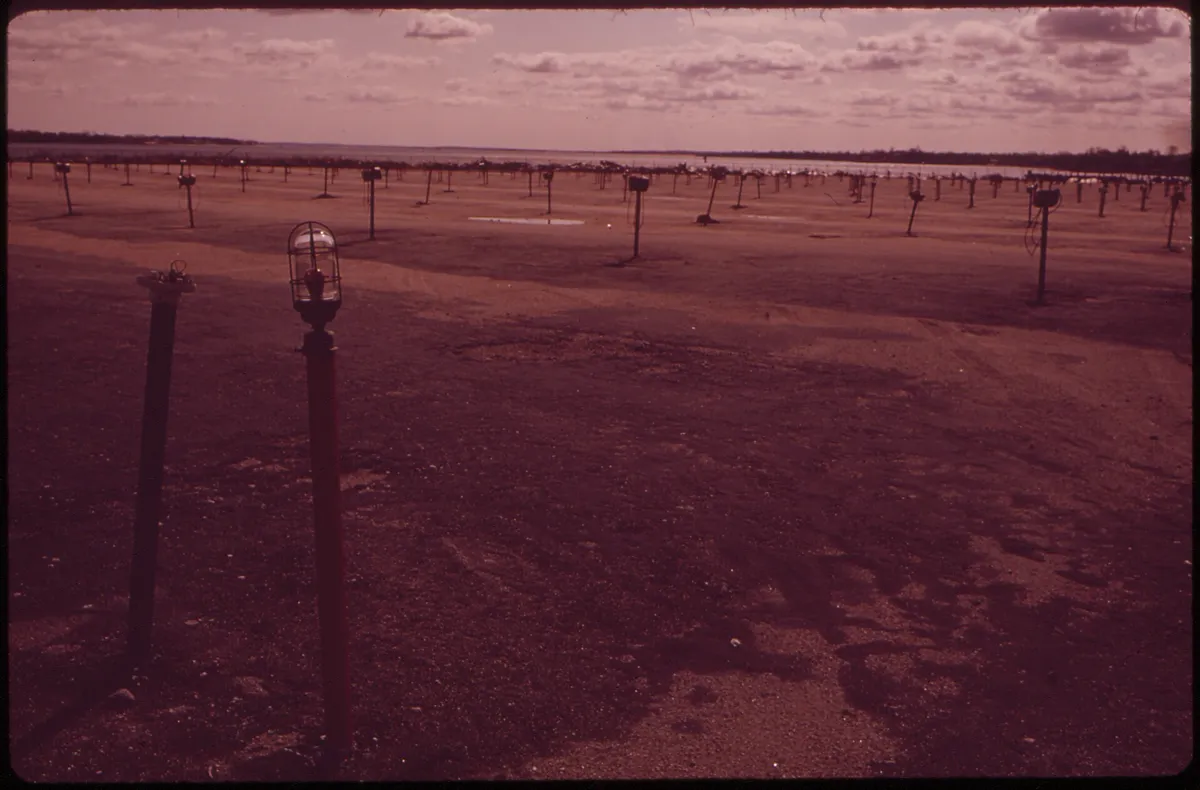
The drive-in also had a reputation. Critics called them "passion pits," JSTOR Daily explains, drawing on research by film historian Mary Morley Cohen. The St. James Encyclopedia describes an unofficial seating chart: families toward the front, dating teenagers in the middle, and the back rows best left unexplored. Unlike in an indoor theater, audiences could smoke, eat and talk through the whole show.
Why the screens went dark
The decline came slowly and for several reasons at once. Drive-ins were built on big lots at the edge of town. As towns grew out to meet them, the Tennessee Encyclopedia says, the cost of holding that much land became too much for many owners, and selling to developers often made more sense than another summer of double features.
Competition did the rest. The St. James Encyclopedia lists multiplex cinemas, cable television and the home video cassette recorder, along with gas shortages that pushed families into small cars that were cramped for a double or triple feature. Many drive-ins could only book older or second-run movies. More than 1,000 drive-ins closed between 1978 and 1988, according to the Tennessee Encyclopedia.
Sound got an upgrade, at least. The St. James Encyclopedia says sending movie sound over the radio became practical around 1982, and by 1985 about 70 percent of drive-ins had viewers tune their car radios instead of using window speakers.
Then came the end of film itself. In August 2013, Honda launched "Project Drive-In," warning that studios planned to stop distributing 35mm film by the close of that year. Converting to a digital projector cost an estimated $75,000 or more per screen, and Honda said hundreds of drive-ins could shut down. The company gave away digital projectors to theaters chosen by public vote, but many small owners had to find the money on their own.
How many are left, and where
The trade group's latest count, for 2025, is 280 drive-ins with 480 screens in the United States. That is down from about 305 in 2019 and about 318 in 2021, according to CNN, which reported that drive-ins briefly took in 85 percent of the nation's box office in the spring and summer of 2020, when indoor theaters were closed.
The drive-in is far from evenly spread. The association's 2025 figures show:
- New York and Pennsylvania: 26 drive-ins each, the most of any state
- Ohio: 24
- Indiana: 19
- California: 13
- New Jersey, where it all began: just 1
- Delaware, Hawaii, Louisiana and North Dakota: none
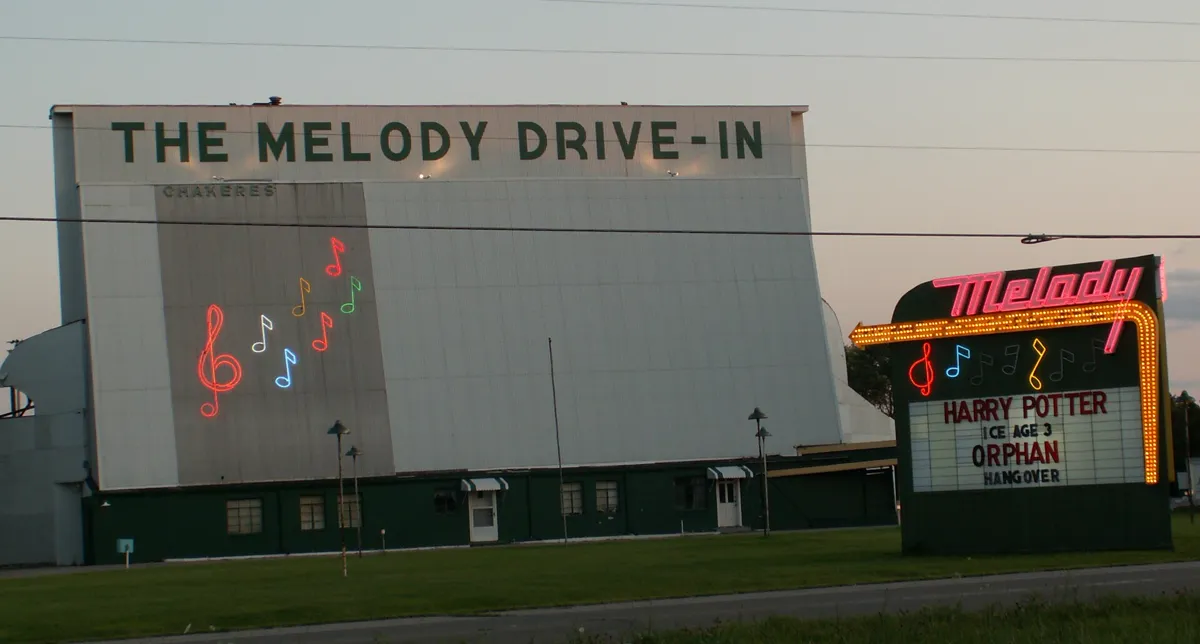
One survivor is the Melody 49 Drive-In in Brookville, Ohio, shown at the top of this page, which opened in 1966. Its website lists carload pricing and two FM radio stations, one for each screen, so you hear the movie through your own car stereo.
There is some good news, too. In August 2026, KCUR reported that a nonprofit near WaKeeney, Kansas, had raised more than $150,000 to build a new drive-in, and about 100 people turned out for its first double feature. Not everyone is so hopeful. Kansas drive-in owner Blake Smith told the station that "the heyday is never coming back." Another owner pointed to a quieter problem: many of the families who run these theaters have no one lined up to take over.
Finding one near you
Most drive-ins are seasonal, so many are closed now until spring. The United Drive-In Theatre Owners Association keeps a directory of theaters on its website, uditoa.org. Before you go, check the theater's own site for showtimes, its radio frequency, and whether it takes cash or cards. Bring a blanket, a portable radio if your car battery is touchy, and an appetite for the snack bar. Those hot dogs help keep the lights on.
Did you remember?
- What was the first movie you remember seeing at a drive-in, and who was in the car with you?
- Did your family pile the kids into the back seat in pajamas, or bring a cooler of homemade snacks instead of buying from the snack bar?
How we checked this story
We read 12 reputable sources, wrote this article in our own words, and link every one of them below. Last checked November 16, 2026.
- Google Patents, "US1909537A - Drive-in theater": Hollingshead's patent filing and grant dates
- Cinema Treasures, "Camden Drive-In": opening date, location, first film, admission price, investment, closing before 1940
- United Drive-In Theatre Owners Association, "Statistics": 2025 count of 280 drive-ins and 480 screens, 1958 peak of 4,063, counts by state
- St. James Encyclopedia of Popular Culture via Encyclopedia.com, "Drive-In Theater": in-car speakers, radio sound, playgrounds, snack bars, seating habits, reasons for decline
- Tennessee Encyclopedia, "Drive-In Movie Theaters": 5,000 estimate, land costs, 1,000+ closings from 1978 to 1988, Tennessee figures
- JSTOR Daily, "Why Drive-Ins Were More Than Movie Theaters": "passion pits" reputation and social atmosphere
- CNN via ABC 17 News, "Drive-in movie theaters saw a surge in customers during the pandemic. Are they sticking around?": 2019, 2021 and 2024 counts, 2020 box office share, concessions
- PR Newswire (American Honda), "Hundreds of Drive-In Theaters Face Closure; Honda Launches Project Drive-In to Save Drive-Ins Across the Country": end of 35mm film, digital conversion cost
- AARP, "5 Standout Drive-In Movie Theaters Across the U.S.": Shankweiler's as the oldest operating drive-in
- KCUR, "A new drive-in theater in Kansas? The old movie experience could be growing again": new Kansas drive-in, Kansas peak, owner quotes
- Sinclair Clarion, "Drive-In to Entertainment: Now Showing": Melody 49 opening year (1966)
- Melody 49 Drive-In, official website: FM radio frequencies and current operation
Spot an error? See our corrections policy.