Tiny animals live inside the metal rocks that deep-sea miners want
A new study counted 4,139 tiny animals living in the cracks of 244 metal-rich rocks from the Pacific seabed. Here is what the scientists found, and why it matters for mining plans.
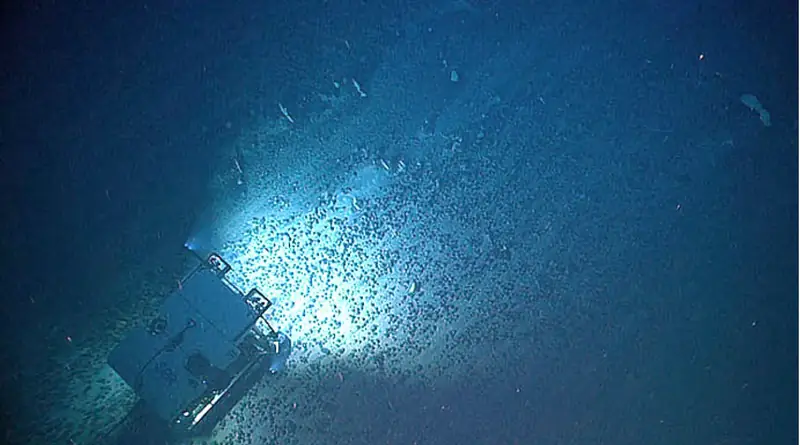
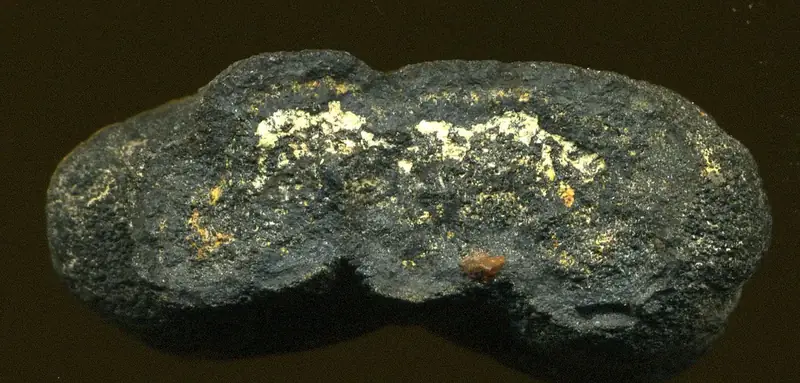
Far below the waves, about 4,000 to 6,000 meters down, the Pacific seabed is scattered with dark, potato-sized rocks. They are rich in metals such as nickel, cobalt and copper, which is why companies want them. A new study shows these rocks are also home to a crowd of tiny animals.
The research was published on Nov. 11 in the journal Scientific Reports. A team from several European universities and research institutes cut open 244 of the rocks, called polymetallic nodules, and found 4,139 animals living in their cracks and pores. Most are smaller than a millimeter. The scientists say these animals form a community that is different from the one living in the mud around the rocks.
What the scientists did
The nodules came from the Clarion-Clipperton Zone, a huge stretch of deep seabed in the central Pacific between Mexico and Hawaii, according to Gizmodo. According to ScienceAlert, they were collected in 2019 by the German research ship Sonne, using a box corer. That is a steel box lowered to the seafloor to scoop up a block of sediment and rocks. The MARUM research center at the University of Bremen says robot submarines also helped gather samples.
Back in the lab, the team broke the nodules apart and picked out the animals. The paper is titled "Polymetallic nodules provide a distinct habitat for abyssal meiofauna." Abyssal means from the deep ocean floor. Meiofauna means animals so small you need a microscope to study them.
The numbers
- 244 nodules were examined.
- 4,139 animals were found in them, according to the MARUM press release.
- 17 animals per nodule on average. One crowded nodule held 245.
- Up to about 1,000 kilometers. The animal communities in nodules were very similar across distances of up to about 1,000 km (roughly 620 miles), but clearly different from the animals in the nearby sediment.
ScienceAlert reports that roundworms and crustaceans were the most common animals. It says a type of armored single-celled organism called Thurammina dominated its group. A few nodules also held bristleworms, tiny "mud dragons" and tardigrades, the microscopic creatures nicknamed water bears.
One detail may surprise you. The nodules held fewer animals than the sediment around them. According to the study, roundworms made up only about 10 percent, and copepods (tiny crustaceans) about 25 percent, of the numbers found in sediment. So the point is not that nodules are crowded. The point is that the animals living in them are a different group.
Why the cracks matter
Nodules grow extremely slowly, by layers of metal building up over millions of years. Their surfaces are full of cracks and pores. Tanja Stratmann, a deep-sea ecologist on the team, says these are large enough to give a home to animals smaller than a millimeter.
Coral Diaz-Recio Lorenzo, the lead author, said the crevices work as small shelters for animals "that we do not encounter in the soft sediment." She also told ScienceAlert what surprised her most was how different the nodule communities were from those in nearby sediment.
Earlier research by other teams had already found larger animals, such as sponges and anemones, attached to the outside of nodules. This new work looks inside.
The mining question
Nodules are a target for deep-sea mining because of the nickel, cobalt and copper in them. Gizmodo reports that the industry has not yet moved to full commercial operations, but is testing its technology. Mining the seabed would mean removing the nodules.
Sabine Gollner, a deep-sea biologist at the Royal Netherlands Institute for Sea Research (NIOZ), said commercial mining "may result in an irreversible loss of undescribed and unique biodiversity associated to nodules." Because nodules take millions of years to form, a mined area cannot simply grow them back.
The team says its findings matter when countries plan protected areas on the seabed.
What this means, and what we still don't know
This is a science study, not a decision about mining. It does not say mining should or should not happen. It adds to the facts that regulators and companies will weigh.
Some questions are still open:
- Would species disappear for good? The team says future research must show whether losing nodules in one area could cause a species to go extinct everywhere, or whether the animals can live elsewhere.
- How old are the animals' homes? The researchers note that tiny fossils found inside the nodules do not prove animals colonized them at the time those layers formed.
- Other regions. The samples came from two licensed exploration areas in one part of the Pacific. Other areas may differ.
- Many species are unnamed. Many animals from the deep seabed have never been described by science.
The study was funded through the JPIOcean "MiningImpact" projects, a European research program on the effects of deep-sea mining.
What do you think?
- Did you know the deep ocean floor had this much life? What surprised you most?
- Should scientists have more time to study the seabed before any mining begins? Tell us what you think.
How we checked this story
We read 4 reputable sources, wrote this article in our own words, and link every one of them below. Last checked November 24, 2026.
- MARUM, University of Bremen, via EurekAlert, "Hidden worlds in the deep ocean": study details, 244 nodules, 4,139 animals, average 17 and maximum 245, 1,000 km, Stratmann, Diaz-Recio Lorenzo and Gollner quotes, open questions
- Scientific Reports, "Polymetallic nodules provide a distinct habitat for abyssal meiofauna" (Diaz-Recio Lorenzo, Stratmann, Gollner and others, 2026): journal, title, authors, publication
- ScienceAlert, "Strange 'Metal Potatoes' Contain a Microcosm of Life Not Seen Anywhere Else on The Seafloor, Scientists Find": 2019 Sonne collection, animal types, 10 and 25 percent comparison, fossils caveat, quotes
- Gizmodo, "Deep-Sea Miners Want These Rocks for Their Metals. Scientists Found Them Teeming With Life": location between Mexico and Hawaii, industry testing status, numbers
Spot an error? See our corrections policy.