Dolphins that keep a steady circle of friends may live longer, a 40-year study finds
Researchers who followed wild dolphins in Western Australia for four decades found that the animals with the most consistent social habits tended to live longest. The size of the group did not matter.

Staying close to the same friends may be good for dolphins, too. A new study from the University of Queensland in Australia followed a community of wild dolphins for about 40 years. It found that the dolphins that kept to a steady group size tended to be more socially successful and to live longer.
The surprise is what did not matter. According to the university, there was no ideal group size. Some dolphins did well in big groups and some did well in small ones. What counted was being consistent. The finding is a link, not proof of cause, and we explain that limit below.
What the researchers did
The work was led by Kelley Meehan, a PhD candidate in the University of Queensland's School of the Environment. The university says the paper appears in the journal PLOS Biology. It draws on 40 years of records about wild Indo-Pacific bottlenose dolphins in the eastern gulf of Shark Bay, in Western Australia.
The numbers vary a little by source. The university and ABC News say the study covers roughly 400 dolphins and close to 65,000 separate sightings. A piece written by the researchers for The Conversation says "over 450" dolphins. We have not read the full paper, so we cannot say which count applies to which part of the analysis. The oldest dolphin in the community is 53 years old, according to the university and ABC. The Conversation piece says 54.
Shark Bay is a good place for this kind of work. ABC News reports that researchers can identify each dolphin by its dorsal fin, the tall fin on its back. They can see the same animals day after day, which Meehan described as "hundreds and hundreds of repeated measures."
What they found
- Consistency mattered. The university says the research showed that "regardless of the group size or preferred behaviour, consistency was what had a longevity benefit."
- No perfect group size. Dolphins that more consistently chose a similar group size tended to have stronger "social competence" (skill at getting along with others) and lifelong friendships, according to ABC News.
- Dolphins settle with age. Young dolphins are often seen in a wide range of group sizes. Older ones become more set in their ways. "Do they become set in their ways? The answer is kind of yes," Meehan told ABC.
- Longer lives. In The Conversation piece, the authors write that the dolphins whose group size and predictability kept growing most with age lived longer.
- Males and females differ. The Conversation piece says males had a higher average group size and were more predictable than females. The university explains part of the reason: males must work together to guard females, which have a calf only every 3 to 4 years, while females do not need other females to find food.
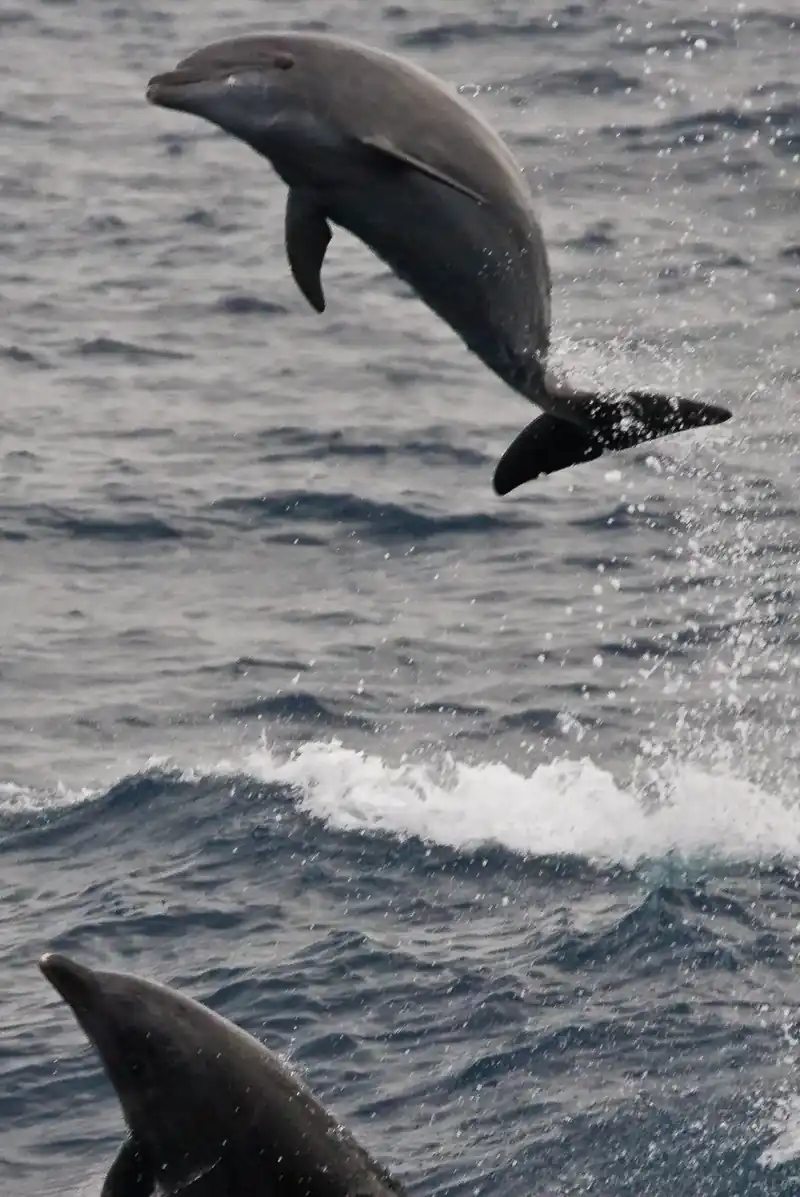
Two dolphins, two styles
ABC News gave two examples. A female named Piccolo is usually seen with six to ten other dolphins. She has been spotted more than 1,000 times, and Meehan said "we almost never see her by herself."
Another female, Ibex, is almost only ever seen with her current calf or one of her older children. "She's not super social, but that's okay," Meehan said. "She spends most of her time foraging and she's very successful at it."
Both are stable, and that is the point. According to Meehan, animals that are good at building "strong and stable social positioning," reflected in their group size, "tend to live the longest."
What it means, and what it does not
Humans are not dolphins, and the study says nothing directly about people. But it shows what long-term records can reveal. Dolphins live for decades and, according to the researchers, form friendships that last a long time.
There are limits:
- It shows a link, not a cause. Meehan described it in the university release as a "strong trend." The headline says friendships "could" help dolphins live longer. Dolphins that are healthier may simply find it easier to keep a steady social life.
- We have not seen the full paper. Details such as exactly how lifespan was measured are in the study itself, which we did not read in full.
- One community. All the data come from one group of dolphins in one bay.
Vanessa Pirotta, a marine scientist at Macquarie University who was not part of the study, told ABC that long-term data sets like this are "incredibly helpful," because they let researchers watch the same animals over a lifetime.
What do you think?
- Do you have a friend you have kept for 30 years or more? What has helped you keep in touch?
- Do you think your own habits have become more set as you have gotten older, and has that helped or hurt?
How we checked this story
We read 4 reputable sources, wrote this article in our own words, and link every one of them below. Last checked November 25, 2026.
- University of Queensland, "Making and keeping friends could help dolphins live longer": journal (PLOS Biology), 400 dolphins, 65,000 sightings, consistency finding, male and female differences, "strong trend"
- PLOS Biology, study by Meehan and colleagues: paper linked from the university release (not read in full)
- ABC News (Australia), "Long lasting dolphin friendships linked to increased lifespans, University of Queensland researchers find": Meehan quotes, Piccolo and Ibex examples, dorsal fin identification, Pirotta comment
- The Conversation, "40 years of data on one dolphin community teaches new lessons about social circles in old age": researchers' own account, 450 dolphins, age and group size patterns, differences between males and females
Spot an error? See our corrections policy.