Scientists read a whale's full genome from its breath, caught by a drone
Researchers off British Columbia flew small drones through the spray of humpback whales and sequenced their DNA, with no darts and no close boat approaches.
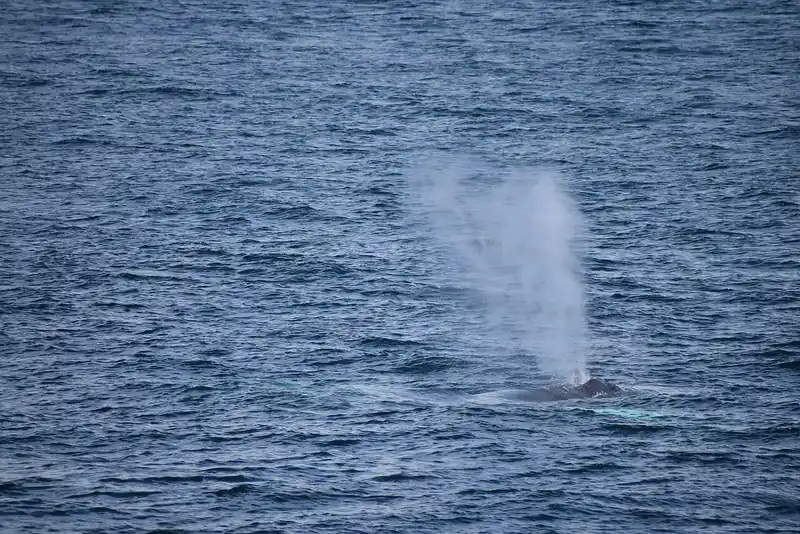
To study a whale's DNA, scientists have usually had to shoot a small dart into its skin to take a tissue sample. A new study shows another way: catch the whale's breath.
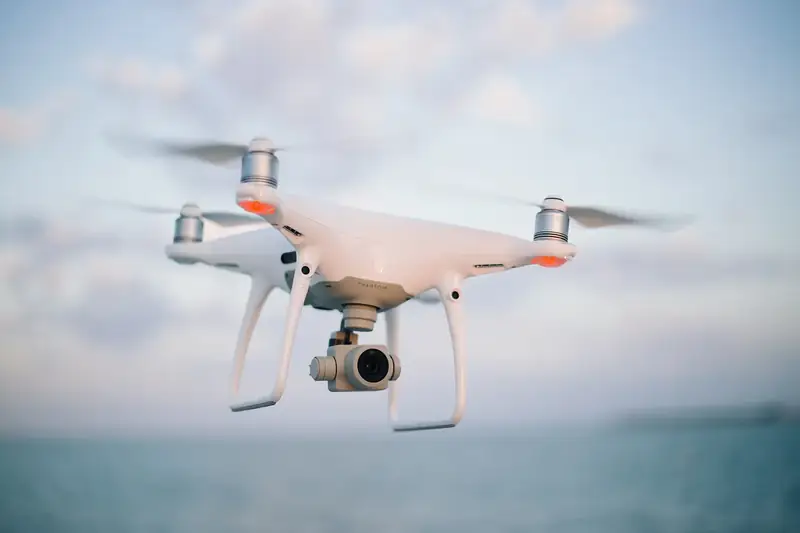
Researchers flew small drones through the misty spray whales blow from their blowholes, then read the DNA in it. According to the University of St Andrews in Scotland, it is the first time whole genomes of humpback whales have been sequenced from this "blow." A genome is an animal's complete set of genetic instructions.
What the team did
The paper, "Breath to genome: Whole Genome Sequencing of Large Whales from Blow Sampling," was published Nov. 17 in the journal Molecular Ecology Resources. The lead researcher is Dr. Éadin O'Mahony, who was at the University of St Andrews. Partners include the University of Copenhagen, the North Coast Cetacean Society and Fisheries and Oceans Canada.
The work took place in the Kitimat Fjord System in northern British Columbia, in the territory of the Gitga'at First Nation. The university says the team worked under research agreements with the Gitga'at and under a Canadian government research permit, and that the university's animal welfare board approved the study.
Here is how a sample was collected, according to the university and Popular Science:
- A drone with a dish. Sterile petri dishes were attached to a small commercial drone.
- Flying through the breath. The drone passed through the exhaled breath, typically catching one to six breaths each time a whale surfaced.
- Careful rules. The team targeted the most upwind whale in a group, never sampled resting whales, and stopped flying if a whale reacted.
- Often from shore. More than a third of samples were collected by flying from land, with no boat nearby.
The numbers
The team collected 58 blow samples from 26 individual humpback whales over two years. Canadian Press, which spoke with O'Mahony, reports the sampling happened in 2022 and 2023.
- 84%. About 84% of the DNA in the blow came from the whale itself, according to the university.
- About 16%. The rest came largely from microbes living in the whale's airways, the university says.
- 3. The team found three previously undescribed variants of mitochondrial DNA, a type passed down only from mothers.
- 1. Before this study, only one North Pacific humpback whole genome was publicly available, according to the university.
The researchers checked their results in several ways. Repeat samples from the same whales, taken at different times, gave matching genomes. Genetic diversity measured from blow was very similar to that from traditional tissue samples. The sex of every whale was identified correctly. And there was no sign that DNA from neighboring whales had contaminated the samples.
The genomes also showed little evidence of recent inbreeding in this group of humpbacks. Popular Science notes this is good news for the population, though some long stretches of identical DNA probably reflect distant shared ancestors or past population crashes.
Why it matters
Until now, a whole whale genome generally required a tissue biopsy, a stranded animal or an old museum specimen. The university says genomes can help scientists judge a population's health, identify individual whales, and estimate how many breed.
Drones can do this without close boat approaches or darts. That may be gentler on the animals, though the study does not claim to have measured stress levels.
O'Mahony told Canadian Press that blow sampling will not "once and for all replace" biopsies. She sees it as another tool for situations where a biopsy is hard to take.
What comes next
The team plans to use the blow genomes to learn how groups of whales are related. O'Mahony asks whether whales that feed together are "family, or long-term friends."
The microbe DNA in the breath may also offer a window into whale health, the university says, but that is an idea for future work, not a finding of this study.
What we still don't know
- Sequencing depth. The sources we could read did not give technical details such as how deeply the DNA was read. The university describes the nuclear genomes as "low-coverage," meaning each part was read only a few times.
- Other species. The study sampled humpbacks only. Whether the method works as well on other large whales is not shown here.
- Health insights. Using the microbes to track whale health is still just a possibility.
What it means for you
You will not notice anything in daily life. But it is a good example of how small, cheap technology is changing wildlife science. Studying wild animals with less disturbance can make it easier to protect them.
What do you think?
- Have you ever seen a whale in the wild? What was it like?
- Do you think drones are a good tool for studying wildlife, or do they bother animals too much?
How we checked this story
We read 3 reputable sources, wrote this article in our own words, and link every one of them below. Last checked November 24, 2026.
- University of St Andrews via EurekAlert, "News Release" on whale genomes from blow: Primary source: study details, journal, 58 samples, 26 whales, 84% whale DNA, method, ethics
- Popular Science, "Whale snot helps scientists sequence an entire genome": Method, 16% microbial DNA, inbreeding finding, three new variants
- Canadian Press via CP24, "Researchers on B.C. coast use drones to collect whale snot for genome sequencing": Interview with O'Mahony, 2022-2023 sampling, biopsy not replaced
Spot an error? See our corrections policy.