November is peak deer-crash season: the odds in your state, and what to do
Fall is when deer are on the move, and November is the worst month for crashes with large animals. Here is what the newest numbers show, why deer cross roads now, and how to lower your risk.

If it feels like you see more deer by the side of the road right now, you are not imagining it. Fall is mating season for deer, and they are moving around more than at any other time of year. According to State Farm, November is the top month for crashes with large animals, followed by October and December.
The newest figures, released by the insurer on Sept. 15, put the national odds of a driver having an animal collision at 1 in 145 over the past year. That is a little better than the year before, but it still adds up to more than 1.6 million claims. Below is what the numbers say, which states have the highest risk, and the simple habits that safety officials say make the biggest difference.
The numbers
State Farm has tracked animal collisions for 20 years. Its latest study covers July 1, 2025, through June 30, 2026. According to the company:
- 1 in 145. These are the national odds of an animal collision, an improvement from 1 in 139 the year before.
- More than 1.6 million. That is the estimated number of animal-vehicle collision claims across the US in that year.
- $1.9 billion. That is how much State Farm alone paid on those claims.
- Deer are No. 1. Deer remain "by far the most frequently struck animal," the company says. Claims also involve dogs, raccoons, cattle, coyotes, cats, turkeys, hogs and bears. Rodents show up in the claims too, partly because they chew car wires.
Crashes can also be deadly. The Insurance Institute for Highway Safety (IIHS) counted 210 deaths in crashes involving animals in 2024. In 1975 the number was 89. The IIHS says deaths rose until the mid-2000s and have leveled off over the past decade.
The states with the highest odds
West Virginia has had the highest likelihood of an animal collision for more than a decade, State Farm says. A Stacker report published Nov. 3 lists the full top 10 from the insurer's data:
- West Virginia: 1 in 46
- Montana: 1 in 54
- Wisconsin: 1 in 62
- Pennsylvania: 1 in 64
- Michigan: 1 in 68
- Iowa, Mississippi and Virginia: 1 in 81 each
- Maine: 1 in 85
- South Dakota: 1 in 86
Odds measure your chances, not the total. By sheer number of claims, Pennsylvania led the country with about 141,000, according to State Farm.
Why deer cross roads in the fall
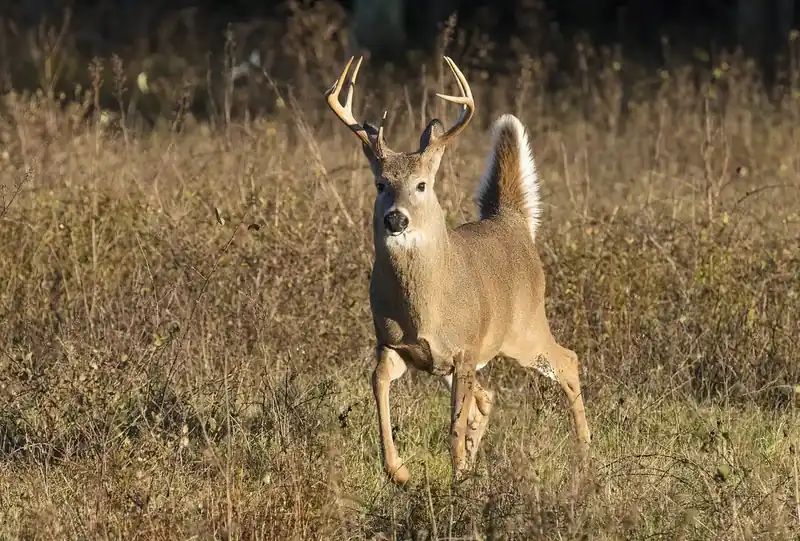
The fall breeding season is called the rut. During the rut, deer are "on the move," as the Wisconsin Department of Transportation (WisDOT) puts it, and that raises the risk of crashes.
Low light makes it harder. State Farm says animals may be more active from dusk to dawn, just when visibility is poorest, and fall days are getting shorter. "Deer alongside the road can suddenly dart into traffic, and the shorter days can make them harder to spot," Wisconsin State Patrol Superintendent Tim Carnahan said in WisDOT's Oct. 14 release.
Daily habits play a part too. "A lot of deer will spend the day in forests and at night come out into agricultural fields and into suburban gardens," David Gorchov, a biology professor at Miami University in Ohio who studies deer, said in an interview distributed by Stacker. That means roads where woods meet farm fields deserve extra care.
Wisconsin's figures show how sharp the fall peak is. The state counted 17,793 crashes involving deer in 2025, with six deaths and 720 injuries. November alone had 3,389 deer crashes, the most of any month, and 42% of the year's deer crashes happened from October through December.
How to lower your risk
The advice from State Farm and WisDOT is much the same:
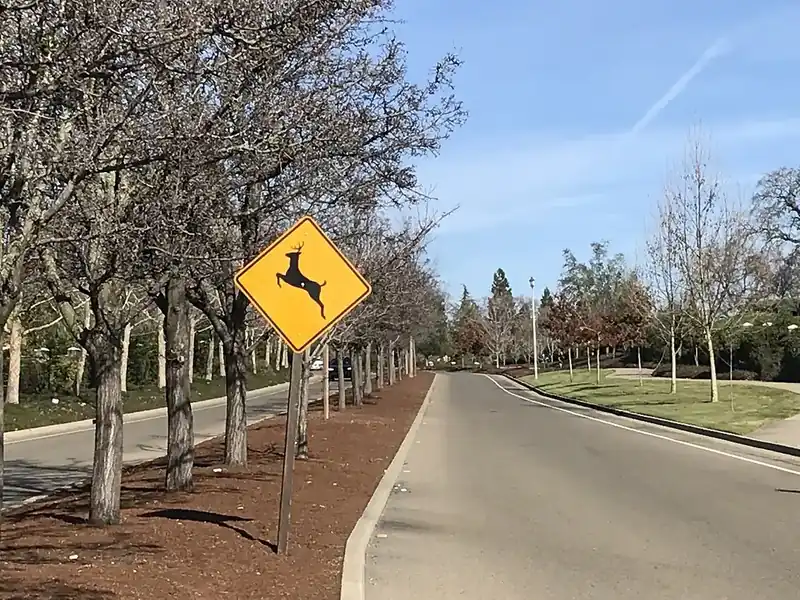
- Slow down at dawn and dusk. Drive at a speed that gives you time to react, especially in marked deer-crossing areas and where roads run between woods and fields.
- Use your high beams when no one is coming. They help you see farther, and Stacker notes they light up the eyes of animals near the road.
- Expect more than one. "If a deer crosses the road, be prepared for others to follow," WisDOT says.
- Brake, don't swerve. If a deer steps in front of you, brake firmly and stay in your lane. Swerving can make you lose control or hit another vehicle.
- Buckle up and put the phone away. WisDOT asks drivers to cut out distractions and make sure everyone in the car is wearing a seat belt.
- Don't count on gadgets. Deer whistles, fences and reflectors have not been proven to reduce collisions, according to the Stacker report, which cites State Farm and the Insurance Information Institute.
Motorcyclists face the most danger. In Wisconsin, 223 deer crashes involved a motorcycle in 2025, resulting in four deaths and 80 serious injuries. That means 38% of those crashes ended in death or serious injury, compared with less than 0.1% for cars and light trucks. WisDOT tells riders to use controlled, straight-line braking, and to swerve only if they can safely stay in their lane.
If you do hit a deer
- Get safe first. Move the car to a safe spot if you can, and turn on your hazard lights.
- Call for help when needed. WisDOT says to call 911 if someone is hurt or the deer is in a lane of traffic. State Farm says to call police if the animal is blocking traffic.
- Leave the animal alone. Don't approach an injured or frightened animal, State Farm says, and never try to move an injured deer, WisDOT says.
- Check the car before driving on. Look for leaking fluids, damaged tires and broken lights. State Farm also suggests documenting the scene.
- Call your insurer. State Farm says comprehensive coverage typically covers animal collisions, subject to your policy's terms and deductible. If you only carry liability coverage, ask your agent what applies.
What the numbers don't show
The figures come with some caveats:
- Odds come from one insurer. The odds are State Farm's estimates based on insurance claims across the industry. They are not a government count of crashes.
- Deadly crashes follow a different calendar. Crashes peak in the fall, but the IIHS found that in 2024 the most deaths happened from July through September: 67 deaths, compared with 53 from October through December. The IIHS does not give a reason in its data.
- Hitting the animal is not always what kills. The IIHS says many fatal animal crashes involve a second impact that is more severe, such as hitting another vehicle or a tree. That fits the advice from State Farm and WisDOT to brake rather than swerve, since swerving can lead to a more serious crash.
- Wildlife crossings help, but only in some places. State Farm points to Colorado Highway 9, where wildlife crossings and fencing cut collisions by about 90% during early monitoring. On ordinary roads, the driver is still the main defense.
The good news is that the habits that help are simple: slow down when the light is low, watch the edges of the road, and brake rather than swerve.
What do you think?
- Have you ever hit a deer, or had a close call? What time of day was it?
- Are there stretches of road near you where you always slow down for deer?
How we checked this story
We read 4 reputable sources, wrote this article in our own words, and link every one of them below. Last checked November 20, 2026.
- State Farm, "20 Years of Animal Collision Data, One Goal: Safer Roads Ahead" (Sept. 15, 2026): national odds 1 in 145 and 1 in 139, 1.6 million claims, $1.9 billion, study period, top-5 states, Pennsylvania 141,000 claims, animals struck, safety tips, after-crash steps, comprehensive coverage, Colorado Highway 9, IIHS 210 deaths
- Insurance Institute for Highway Safety, "Fatality Facts 2024: Collisions with fixed objects and animals": 210 deaths in 2024, 89 in 1975, trend, deaths by quarter, secondary impacts
- Wisconsin Department of Transportation, "Drivers cautioned to watch for deer on Wisconsin roads" (Oct. 14, 2026): rut, 2025 Wisconsin crash, death and injury counts, November 3,389, 42% in Oct.-Dec., motorcycle figures, Carnahan quote, safety and after-crash advice
- Stacker via KRDO, "November is peak deer-collision season. Drivers in these states face the highest risk" (Nov. 3, 2026): November-October-December ranking, full top-10 state odds, high beams, deer whistles not proven, Gorchov quote
Spot an error? See our corrections policy.