The Leonid meteor shower peaks tonight: when and where to look
The Leonids are at their best tonight into Wednesday morning. Don't expect fireworks, but with a dark sky and a little patience you may catch a few of the fastest shooting stars there are.
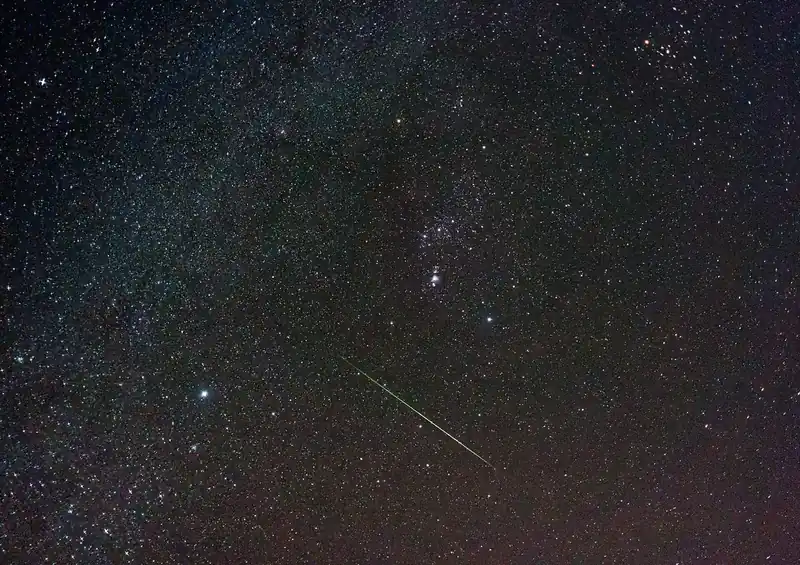
If the sky is clear where you live, tonight is a good night to step outside after midnight and look up. The Leonid meteor shower, a yearly display of shooting stars that comes every November, is near its peak on the night of Tuesday, Nov. 17, into Wednesday morning, Nov. 18.
When to look
The best hours are the same in every US time zone: from about midnight until the first light of dawn, local time. That is when the part of the sky the meteors seem to come from rises and climbs higher, according to EarthSky, Space.com and NASA.
The exact moment of the peak is less certain, and the experts don't all agree. The International Meteor Organization (IMO), which publishes a yearly calendar of showers, puts the main peak at 23:45 Universal Time on Nov. 17. That works out to 6:45 p.m. ET (3:45 p.m. PT), the same time Space.com gives. EarthSky lists 7 p.m. ET, citing the American Meteor Society (AMS). The IMO calendar also mentions another forecaster who puts the peak earlier on Nov. 17. Meanwhile, NASA's Leonids page and the AMS's own calendar list the peak as the night of Nov. 16-17, a night earlier.
For Americans, those early-evening peak times don't change much. The shower's source area is still below the horizon in the evening, so the hours before dawn on Wednesday are still your best bet. Space.com says the early mornings of both Nov. 17 and Nov. 18 are worth trying, so if you miss tonight, Wednesday night is a reasonable backup, with fewer meteors.
How many you might see
Keep expectations modest. The Leonids are a light shower in most years. EarthSky says a dark, moonless sky can deliver about 10 to 15 meteors an hour, and the IMO gives a similar top rate of about 15. NASA is more cautious, saying rates are often about three an hour under dark skies.
That gap comes down to how the numbers are measured. Space.com explains that the 15 figure is a best-case number that assumes a perfectly dark, clear sky with the source area straight overhead. City lights, clouds and haze all cut into it. From a typical suburb, a handful in an hour is a fair hope.
What the Leonids lack in number they make up in speed. NASA says they hit our atmosphere at about 44 miles per second, making them among the fastest meteors there are. Space.com notes they can produce bright fireballs and long glowing trails.
Where the Moon will be
The Moon should not spoil things much this year. EarthSky says the Moon reaches its first quarter phase (half lit) on Nov. 17 and sets around midnight, just as the best viewing begins. Space.com agrees it will set before the best early-morning hours.
Where to look in the sky
The meteors seem to fly out from the constellation Leo the Lion, which is how the shower got its name. That spot is called the radiant. Look for a backward question mark of stars called the Sickle, which marks the lion's mane, starting from the bright star Regulus, Space.com suggests.
But you don't need to stare at Leo. Meteors can show up anywhere in the sky. NASA explains that the ones farther from Leo tend to look longer and more dramatic, so take in as much sky as you can.
How to watch
- Find a dark spot, away from streetlights and porch lights. A backyard with the lights off is fine if the city is not too bright.
- Dress for winter. NASA suggests a sleeping bag, blanket or lawn chair, and lying on your back with your feet toward the east.
- Give your eyes time. Plan on about 20 to 30 minutes for your eyes to adjust to the dark, and avoid looking at your phone, which undoes it.
- Skip the gear. No telescope or binoculars needed. Space.com says the trick is simply to see as much sky as possible.
What the Leonids are
Every shooting star in this shower is a speck of dust left behind by a comet called 55P/Tempel-Tuttle. The comet loops around the Sun about every 33 years, shedding bits of ice and rock along its path. Each November, Earth plows through that trail, and the bits burn up high in the air as streaks of light. NASA says the comet's solid core is only about 2.24 miles across. Two astronomers, Ernst Tempel and Horace Tuttle, found it separately in 1865 and 1866. The IMO says its next close pass by the Sun is due on May 20, 2031.
When the stars fell
Every so often, Earth hits a thick clump of comet dust, and the Leonids turn into a meteor storm, which NASA defines as at least 1,000 meteors an hour.
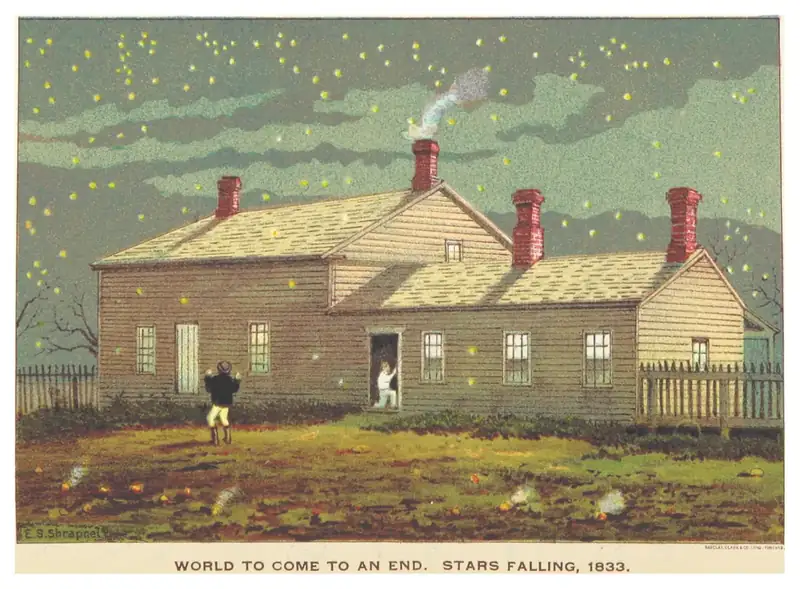
The most famous came on the night of Nov. 12-13, 1833, often remembered as "The Night the Stars Fell." EarthSky cites estimates of up to 2,500 meteors a minute, or roughly 150,000 an hour.
Another storm came on the morning of Nov. 17, 1966, exactly 60 years ago today. NASA says watchers saw thousands of meteors a minute for about 15 minutes. Accounts of the peak differ: Space.com cites some reports of 40 meteors a second, while EarthSky says observers in the southwest US reported up to 70 a second. NASA says the most recent Leonid storm was in 2002.
Not a storm year
Scientists do not expect a storm this time, EarthSky says. The IMO calendar notes that computer models show Earth passing a few thin, older dust trails over the next few days, but not enough to cause a real outburst. The AMS says the years around the comet's 2031 return may bring good displays of more than 100 an hour.
So tonight is about a quiet, cold, pleasant hour under the stars. If you catch even one fast, bright Leonid, you have seen a bit of a comet that has been circling the Sun for centuries.
What do you think?
- Have you ever watched a meteor shower? Where were you, and what do you remember about it?
- Did you or anyone in your family see the Leonid storm of 1966, or hear stories about it?
How we checked this story
We read 5 reputable sources, wrote this article in our own words, and link every one of them below. Last checked November 17, 2026.
- International Meteor Organization, "2026 Meteor Shower Calendar": peak time 23:45 UT Nov. 17, alternate forecast, rate of about 15, 2031 comet return date, weak dust trail encounters
- EarthSky, "Leonid meteor shower 2026: Everything you need to know": 0 UTC Nov. 18 peak (AMS prediction), 10 to 15 an hour, first quarter Moon setting around midnight, Sickle, 1833 and 1966 storm figures, no storm expected
- Space.com, "Leonid meteor shower 2026: When and how to see November's shooting stars": 6:45 p.m. EST peak, best mornings for North America, what the 15-an-hour figure means, Moon, finding Leo, 1966 report of 40 a second
- NASA Science, "Leonids": Nov. 16-17 peak listing, about three an hour, 44 miles per second, comet size and discovery, storm definition, 1966 storm, last storm in 2002, viewing tips
- American Meteor Society, "Meteor Shower Calendar": Nov. 16-17 peak listing, outlook for displays around 2031
Spot an error? See our corrections policy.