Researchers fused fake moon dust into LEGO-style bricks for future lunar bases
Engineers at the University of Arkansas used a laser to turn a moon-soil lookalike into small interlocking blocks. Here is what they made, how strong it is, and why it is still far from a moon house.
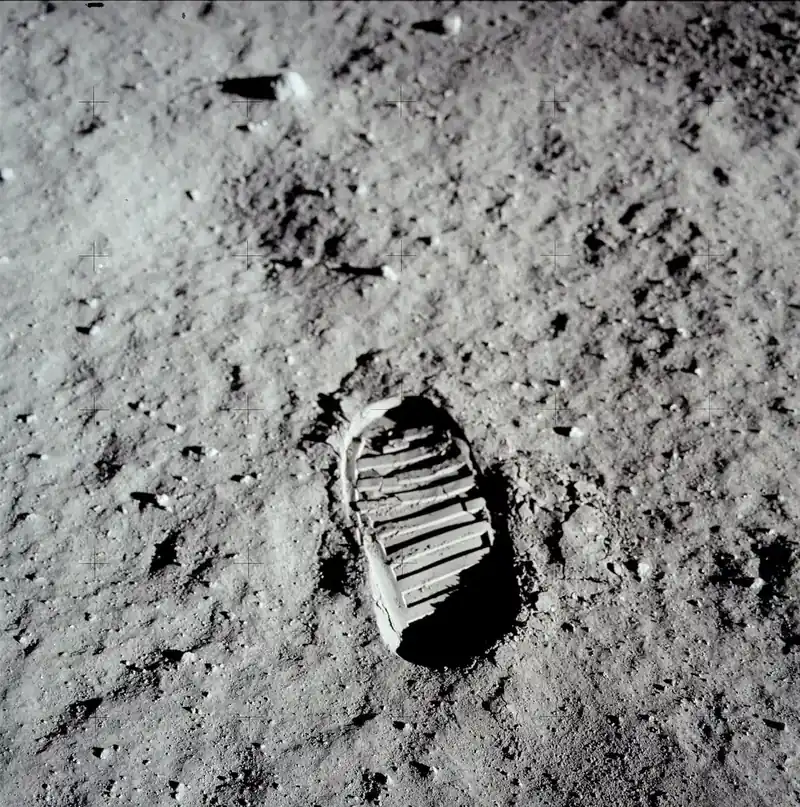
Building a home on the Moon has a basic problem: everything you bring from Earth is expensive to launch. So engineers are looking for ways to build with what is already there, which is the fine gray soil that covers the lunar surface. A team at the University of Arkansas has now shown one way to turn a stand-in for that soil into small, interlocking, LEGO-style blocks.
The work was published Aug. 29 in the journal npj Advanced Manufacturing, and the university announced it on Nov. 11. It is a small lab result, not a moon base. The blocks are only a few centimeters wide, and they are made from a copy of moon soil, not the real thing. Still, it is a neat idea, and the researchers say it avoids a big headache of space construction.
What the team actually did
The study is titled "Additive manufacturing of lunar regolith for reconfigurable building blocks toward lunar habitation." Regolith (REG-oh-lith) is the loose dust and broken rock that covers the Moon. Additive manufacturing is the technical name for 3D printing.
The first author is Cole McCallum, who was an undergraduate at the University of Arkansas at the time, and the senior author is Wan Shou, an assistant professor of mechanical engineering, according to the university.
Real moon soil is far too rare to experiment on. The team used a commercial product called Lunar Highlands Regolith Simulant, known as LHS-1. A simulant is a material made on Earth to mimic the real thing. LHS-1 is designed to resemble the samples brought back by the Apollo missions, the university says.
The researchers aimed a laser at a bed of the powder. This process is called sintering, which means heating a powder until its grains fuse together without fully melting. New Atlas reports that the process is known as laser powder bed fusion, and that even a relatively low-power laser was enough.
No glue needed
Most 3D printing of building materials needs a binder, which is a glue-like ingredient that holds the grains together. A binder would have to be shipped from Earth. The Arkansas team skipped it.
"There's nothing else it's binding to. The regolith powder is binding to itself," McCallum said, according to the university.
The team then made the pieces in shapes such as crosses and "H" shapes, a few centimeters wide, that fit together like LEGO bricks. Because the blocks lock together, they can be taken apart and rebuilt into different structures. The university says the researchers were the first to show that simulated moon soil can be sintered directly into reconfigurable blocks this way. That "first" is the team's own claim.
Why blocks and not one big print
Universe Today notes that making large, complex structures in one piece is still difficult with this kind of method. So the team chose small bricks that can be made in large numbers and then stacked into bigger shapes. That also helps with a practical point: the Moon has about 16.5 percent of Earth's gravity, and it swings from about 54°C (130°F) in sunlight to about -246°C (-410°F) in shadow at the South Pole-Aitken Basin, according to Universe Today. Any building method has to cope with that.
How strong are they? Sources differ
The researchers tested the strength of sintered cubes by squeezing them. The reported number depends on which source you read:
- Early version of the paper. A preprint, which is a draft posted online before review, says the peak compressive stress was about 1.5 megapascals (MPa).
- New Atlas. The outlet reports 3.4 MPa and says residential concrete is around 25 MPa.
We could not read the final journal paper, so we cannot say which figure is current. Either way, the blocks are far weaker than ordinary concrete. The university also says blocks made of pure regolith are more porous and structurally weaker than objects printed with binders.
McCallum was careful about it. "I would be hesitant to say our process could be used for something that's supporting other loads at this moment yet," he said, according to the university.
Not the same as the ESA bricks
You may have seen similar headlines in 2024. That was a different project by the European Space Agency and LEGO. According to Astronomy magazine, those bricks were 3D-printed from dust of a 4.5-billion-year-old meteorite mixed with simulated regolith, and they were a small proof of concept. The Arkansas bricks use a simulant and no meteorite.
Astronomy also notes why real moon dust is not used for experiments like these: the Apollo missions brought back only 842 pounds (382 kilograms) of samples in total, and scientists want to keep them for research.
What we still don't know
- Vacuum and low gravity. The university says more research is needed on how the process behaves in the vacuum and microgravity of space. All the work so far was done on Earth.
- Real moon soil. A simulant is a good copy, but it is not identical to what is on the Moon.
- Power and equipment. Universe Today says the team still plans to build a prototype and run more lab tests. How a laser, or concentrated sunlight, would be powered on the Moon is an open question.
- Strength. The university says the blocks' mechanical performance would need to be improved before they are practically useful.
What it means for you
Nothing changes in daily life, and no one is building with these bricks soon. But it shows how space engineers think: use local material, avoid shipping extras, and make parts that can be reused. NASA plans to land astronauts on the Moon under its Artemis program, and research like this aims at what comes after the first landing, which is staying there.
What do you think?
- If you could build one thing on the Moon out of bricks, what would it be?
- Do you remember playing with building blocks as a child, and did you pass the habit on to your children or grandchildren?
How we checked this story
We read 6 reputable sources, wrote this article in our own words, and link every one of them below. Last checked November 24, 2026.
- University of Arkansas via EurekAlert, "Researchers turn moon dust into LEGO-like blocks for settlements": study title, journal, authors, Aug. 29 and Nov. 11 dates, LHS-1, block shapes and size, McCallum quotes, weaker-than-binder caveat, "first" claim, vacuum and microgravity caveat
- arXiv preprint, "Additive Manufacturing of Lunar Regolith for Reconfigurable Building Blocks toward Lunar Habitation": laser sintering of simulants, interlocking bricks, peak stress of about 1.5 MPa
- New Atlas, "Extraterrestrial habitats may rise via Legos of laser-fused moon dust": laser powder bed fusion, low-power laser, 3.4 MPa, concrete comparison
- Popular Science, "College student develops LEGO-like, 3D-printed moon bricks": confirms study, journal, McCallum and Shou, tiny prototypes, porosity and weakness
- Universe Today, "How to Make Building Blocks for a Lunar Habitat": small bricks rationale, Moon gravity and temperatures, planned prototype
- Astronomy, "Legos, made out of Moon dust, could one day solve a lunar problem": 2024 ESA and LEGO meteorite bricks, 842 pounds of Apollo samples
Spot an error? See our corrections policy.